CHOICE report: Ticket resellers Viagogo and Ticketmaster Reseller gouging Australians
Dirty tricks and mark-ups of 900% have been detailed in a joint report.
Last updated: 30 Aug 2017
“Dark pattern” tactics are being used to dupe Australians into paying up to 900% more for tickets that are resold by third-party sites, a joint report from three consumer bodies reveals.
The Australian ticketing resale market has fared the worst in a report examining complaints conducted by Which?, Consumer NZ and CHOICE.
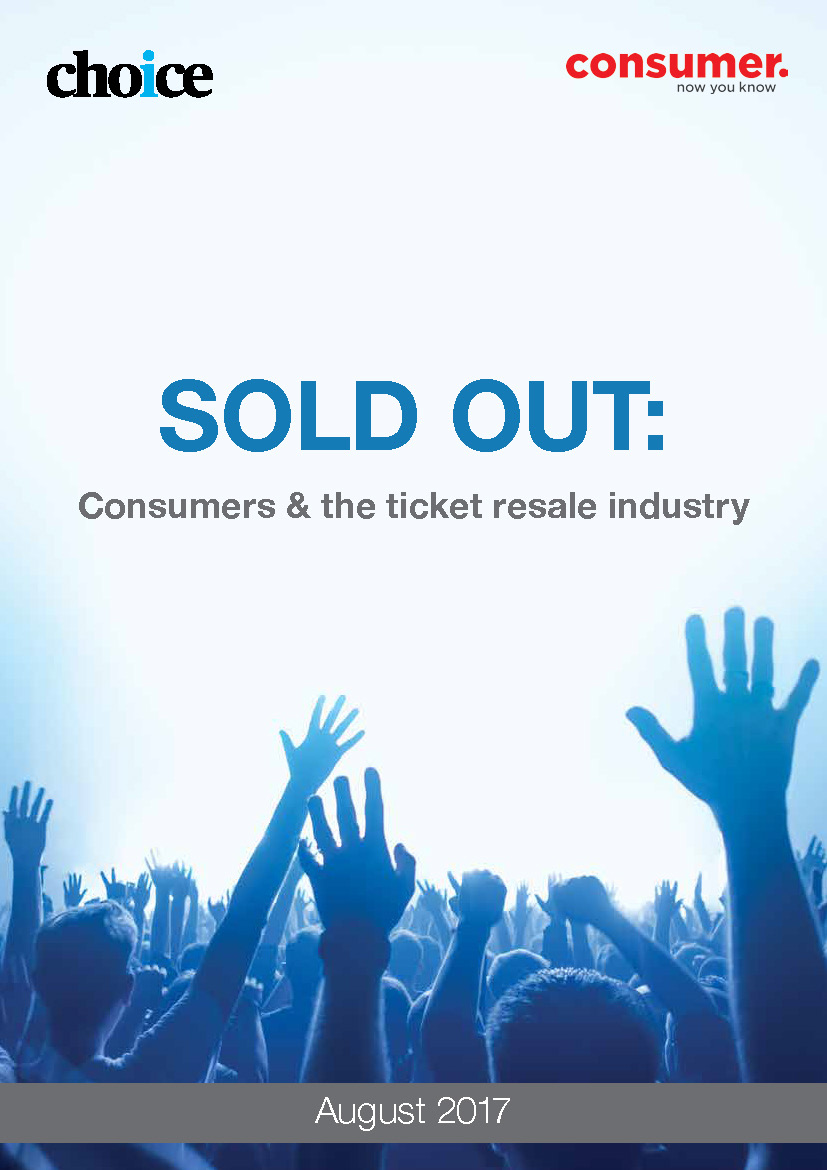
The report, Sold out: Consumers & the Ticket Resale Industry [PDF], examined more than a thousand complaints in the markets of Australia, NZ and the UK.
Resale websites disguised as “official” sites
Tickets purchased in Australia from resale sites such as Viagogo,
TicketMaster Resale and StubHub were sold higher than face value in 83% of
cases, had hidden fees tacked on in 68% of cases and were for the wrong
seats in 8% of cases.
But four-out-of-five Australians who purchased a ticket from these
resellers believed they were buying it from an official vendor, in part
because of how they were marketed and because of the design tactics used by
these sites.
Viagogo, which “overwhelmingly accounted for the majority of customer
service problems”, buys the valued real-estate of a top Google Search
result for upcoming concerts and events, and then lists itself as an
“official site”.
Facebook is also used to feign a genuine events page. Clicking the link in
the description can often divert ardent fans to reseller sites.
False urgency
These reseller sites then subject people to deceptive tactics known as dark
patterns, which are design and text cues intended to fabricate a sense of
urgency so that a sale is made on the spot.
“These are the last tickets left at this price, don’t wait until it’s too
late!” one message can read. Or a warning sign will pop up urging there
are “less than 1% of tickets left for this event”.
Extreme markups and charges
The majority of sales are made at notable markups. A Perth man paid $90 for
an AFL ticket and was given a kids’ ticket valued at $7 – a markup of 900%.
Another instance involved a $70 ticket that was sold on a reseller’s site
for $650 – a markup of 829%.
These markups – the highest detailed in the report – both happened in
Australia.
The worst ticket resale offenders were found to tack on charges that
commonly equate to 25% of the ticket’s value.
Pensioner Dugald Docherty told CHOICE he was hit with a $512 ‘Viagogo service fee’ when
he bought a $2201 ticket to a soccer game last year. The fees alone cost
more than the $442 sales price officially being offered by the club for the
best seats in the house.
It took him five months of emails, calls and legal threats to earn a
refund.
ACCC gets involved
Findings from a CHOICE investigation into ticket resellers were turned over
to the Australian Competition and Consumer Commission (ACCC) in March. The
competition watchdog initiated legal action against Viagogo earlier this
week, alleging it made false and misleading representations, and by engaging
in misleading and deceptive conduct.
The issue of ticket resales is an international one as people often buy
them to see shows in foreign countries. The most egregious of these
companies, which appears to be Viagogo, is under investigation by the
government organisations representing consumers in the UK, US and in its
home country of Switzerland.
About the report
We heard from consumers across markets that the
ticket resale industry wasn’t working for them.
They told us that their top problems in this industry were steep prices, hidden fees and confusion about who they’re dealing with. Consumers also complained about poor customer service, tickets never arriving and fraudulent tickets.
After
receiving complaints about the conduct of the ticket
resale market, consumer organisations CHOICE
(Australia) and Consumer NZ (New Zealand) decided
to collect case studies from consumers who had
bought tickets in the resale or secondary market.
Which? (UK) also collected and shared case studies,
which were included in the report, ‘Sold out: Consumers & the ticket resale industry’.
Changes we’re calling for
- Consumers need better information to help them
decide if they want to use a resale site. Promoters,
venues, and ticketing companies should specify the
number of tickets available for pre-sale and general
sale, the number of events scheduled for a tour and
the number of seats in a venue.
- Ticketing companies should develop and invest
in new technologies to distribute tickets, such as
“verified fans” programs, to curb the business of
professional scalpers.
- Ticketing companies, artists and promoters should
invest in innovations to reduce fraud, for example by
allowing name changes on tickets or by developing
better ticketing systems.
- Resale websites should clearly state they are ticket
resellers and remove any dubious “official” claims
in advertising. Resale websites should also remove
misleading statements such as “last tickets left”
and “selling fast”.
- Resale websites should clearly state tickets’ details
during the booking process, including, where
relevant, the seat and row number, venue, original
price, and restrictions.
Tony Ibrahim is an award-winning journalist who worked at CHOICE from 2016 to 2018, most recently as daily news editor.
He investigated and reported news stories that spanned a range of consumer issues and took pride in shining a light on the injustices faced by everyday people. He was responsible for breaking national stories on fatal Takata airbags, contaminated fuel and more.
He was previously a content producer, coordinating and writing reviews on consumer electronics.
Prior to CHOICE, Tony was group editor of PCWorld Australia and Good Gear Guide, as well as a reporter for CRN.
You can support our investigative journalism by joining CHOICE or making a donation. LinkedIn
Tony Ibrahim is an award-winning journalist who worked at CHOICE from 2016 to 2018, most recently as daily news editor.
He investigated and reported news stories that spanned a range of consumer issues and took pride in shining a light on the injustices faced by everyday people. He was responsible for breaking national stories on fatal Takata airbags, contaminated fuel and more.
He was previously a content producer, coordinating and writing reviews on consumer electronics.
Prior to CHOICE, Tony was group editor of PCWorld Australia and Good Gear Guide, as well as a reporter for CRN.
You can support our investigative journalism by joining CHOICE or making a donation. LinkedIn