We monitored daily prices for whitegoods retailers starting in October 2019 and found some big price jumps around the time of the COVID-19 lockdown restrictions
The biggest price jumps occurred with freezers, as a frightened community faced being confined to home
While price gouging is not technically illegal, we think it should be
In the weeks and months since COVID-19
sent the country into lockdown from mid-March, evidence of price gouging has
not been hard to come by – especially on essential goods.
We’ve received over a hundred tip-offs
about higher-than-usual pricing, mostly for pandemic-related items like face
masks and hand sanitisers, and products snatched off the shelves in bulk by
panicky hoarders, such as toilet paper and tissues.
Many of the tip-offs have included
photographic evidence that looked pretty convincing to us.
We’ve received over a hundred tip-offs about higher-than-usual pricing
And in our March 2020 nationally
representative Consumer Pulse survey of 1041 Australian households, 40% of
respondents said they believed prices for essential goods were generally higher
than usual in recent months.
But price gouging is notoriously hard to
prove.
New laws protect consumers – temporarily
Though they were unveiled without
fanfare, laws against price gouging that took effect on 31 March this year make
it a crime to add more than a 20% mark-up to any essential item related to
COVID-19 protection.
(The price-gouging ban applies to face
masks, hand sanitisers, disposable gloves, alcohol wipes and other products
that might prevent the spread of the virus.)
The legislation is retroactive and covers
preventive products bought from 30 January 2020.
But the legislation is also temporary –
it ends on 17 September 2020 unless the Governor-General extends it. CHOICE is
calling for a permanent ban on price gouging.
“People remember when businesses do right by them and have even longer memories when businesses do the wrong thing,” says CHOICE campaigns and policy adviser Amy Pereira. “Businesses that chose to price gouge in a crisis went for a short-term gain but risk losing the respect of their customers.”
Businesses that chose to price gouge in a crisis went for a short-term gain but risk losing the respect of their customers
CHOICE campaigns and media adviser Amy Pereira
Many businesses have claimed that their
costs went up as supplies ran low and that they had no choice but to jack up
prices.
That may well be true in some cases. In
others, probably not.
“There are currently no permanent laws to
stop businesses hiking prices by unreasonable amounts to take advantage of a
crisis,” Pereira says.
“There should be. It’s why CHOICE is
calling for law reform to cap prices on all essential goods for any crisis we
face.”
Along with the evidence of inflated
prices on fast-moving consumer goods, however, we’ve also received numerous
tip-offs about big-ticket whitegoods whose prices mysteriously shot through the
roof around the time we all ran for cover.
Exhibit A would be freezers – presumably
coveted by the aforementioned hoarders looking to lay in provisions for the
long haul.
Ratcheting up prices on such goods to take advantage of people’s fear is not illegal, technically speaking. But it’s also not nice
Ratcheting up prices on such goods to take advantage of people’s fear is not illegal, technically speaking. But it’s also not nice.
To get to the bottom of the overpriced freezers, we analysed pricing data scraped from retailer websites from October 2019 to March 2020.
There were many instances of price jumps
when the COVID-19 lockdown started to roll out around mid-March, and some
looked more than a little suspicious.
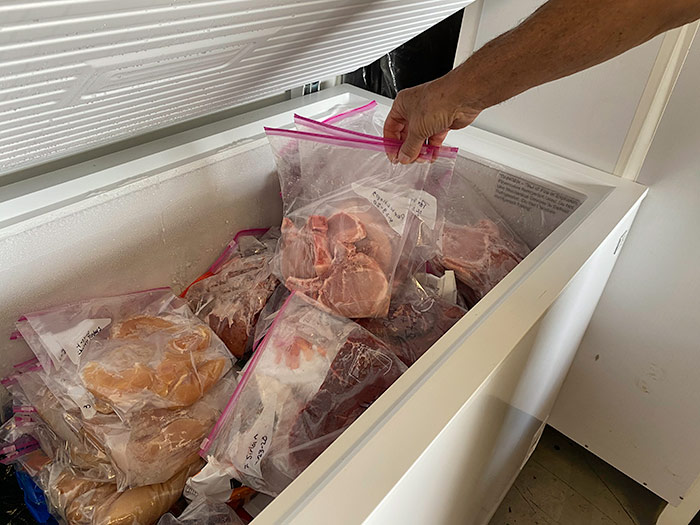
Large freezers turned out to be very popular items as the country went into COVID-19 lockdown.
The
numbers tell the story
Between 18 and 19 March 2020,
for instance, just as the national lockdown was about to come into effect, the
price for a 237L vertical freezer from Winning Appliances went from $2085 to
$2850, and it stayed at the higher price until early April.
It was a 37% price increase overnight.
Over the six-month period we analysed, the biggest previous price jump for this
freezer from Winning Appliances was 10%.
A 237L vertical freezer from Winning Appliances went from $2085 to $2850 …
a 37% price increase overnight
In the same timeframe, the price for a
248L vertical freezer from Winning Appliances jumped from $3921 to $4790. The 22% increase stands out – the highest previous price for this
product over the six-month period was $3952. In that case the product went from
$3693 to $3952 on 25 February, shortly after the travel ban from China was
extended.
When trying to make a case for price
gouging, it’s the numbers that really tell the story, which is why we’ve put together
this graphic, which starts with the examples mentioned above.
Text-only accessible version
Siemens 237L vertical freezer from Winning Appliances – went from $2085 to $2850 on 19 March 2020
Liebherr 248L vertical freezer from Winning Appliances – went from $3921 to $4790 on 19 March 2020
Liebherr 257L vertical freezer from Winning Appliances – went from $3161 to $3790 on 19 March 2020
Westinghouse 500L chest freezer from Billy Guyatts – went from $916 to $1490 on 14 March 2020
Haier 719L chest freezer from Billy Guyatts – went from $1355 to $1695 on 16 March 2020
Haier 519L chest freezer from Billy Guyatts – went from $809 to $990 on 14 March 2020
Liebherr 248L vertical freezer from Appliances Online – went from $3366 to $4141 on 31 March 2020
Liebherr 257L vertical freezer from Appliances Online – went from $3032 to $3790 on 19 March 2020
Esatto 198L chest freezer from Appliances Online – went from $327 to $499 on 22 February 2020
CORRECTION: A typographical error earlier stated that the Liebherr 248L vertical freezer from Winning Appliances went from $3291 to $4790 on 19 March 2020, but its original price was actually $3921.
Supply
chain expert weighs in
While the price hikes detailed above may
not all be proof positive that the retailers in question engaged in price
gouging, the bigger jumps certainly look questionable, says Flavio Macau,
director of academic studies at Edith Cowan University and a senior lecturer in
supply chain management and global logistics.
“Retailers can justify a price raise,
yes. But a 63% raise – hardly,” Macau tells CHOICE, referring to the Billy
Guyatts example in our table.
“To my knowledge, operating costs –
things like labour, electricity, warehousing, transportation, freight and taxes
– have not risen significantly during the COVID-19 pandemic. Purchasing costs
may tell a slightly different story, with currency exchange responsible for
around a 13% variation. Plus we had production lines in China coming to a halt.
How much this added to the costs is hard to know, but it hardly added 50% to
justify the gap from 13% to 63%.”
To my knowledge, operating costs – things like labour, electricity, warehousing, transportation, freight and taxes – have not risen significantly during the COVID-19 pandemic
Flavio Macau, senior lecturer in supply chain management and global logistics at Edith Cowan University
Shipping costs may have been a factor,
but that doesn’t necessarily explain the more extreme price hikes, or why they
occurred shortly before or just as the country was going into lockdown.
“When the supply chain is local it may
take longer for price increases to flow through,” Macau says.
“What you purchase
today is what you pay your supplier for 60 days from now. When the supply chain
is global you may have to quickly increase your price. Variations in exchange
rates, taxes, and so on mean that when you pay 60 days from now you may need
more cash than initially expected – especially if you have no hedge.”
This investigation confirms what our members told CHOICE during lockdown: some companies hiked prices dramatically at the exact time when people needed their help
CHOICE campaigns and policy advisor Amy Pereira
Macau acknowledges that supplies can run
out quickly during a spike in demand, but such a scenario also doesn’t
necessarily justify dramatic price hikes.
“Your forecast is flexible to absorb
variations calculated based on normal times,” Macau says. “If the variation is
much bigger than usual, say above 20% for whitegoods, inventories will quickly
disappear. Bicycles are a similar case of supply shortage, but to my knowledge
there was no price hike.”
“This investigation confirms what
our members told CHOICE during lockdown: some companies hiked prices
dramatically at the exact time when people needed their help,” Pereira says.
“We know that everyone faced challenges in this crisis. Businesses struggled
with new restrictions and cost pressures and many people faced significant
financial and emotional stress from an unprecedented health crisis. Some
businesses chose to take advantage of the stress and urgency people faced in
those early weeks of lockdown.”
John Winning, CEO of the Winning Group
(which includes both Appliances Online and Winning Appliances), tells us that
prices are set automatically and were not increased in response to demand
during the COVID-19 lockdown.
“Prices are determined by an algorithm,
they are not set manually,” Winning says. “The algorithmic pricing is
determined by a combination of factors, including currency exchange rates and
the manufacturers’ product costs. None of these factors were altered during the
COVID months.”
We have not engaged in any form of price gouging and any suggestion that we had, would be factually incorrect
John Winning, CEO of the Winning Group
“During the height of COVID-19, and with
people spending more time at home, there were categories that became popular,”
Winning acknowledges. But he says the assertion that a price increase is
due to popularity alone is incorrect.
“For instance, in April stand
mixers were as popular as freezers and in that month, prices of the top selling
stand mixers on Appliances Online fell and were the lowest in the market at
that time,” he says. “We have not engaged in any form of price gouging and any suggestion
that we had, would be factually incorrect.”
We contacted Billy Guyatts through a
number of channels but did not receive a response.
CHOICE tracked daily retailer prices for
a six-month period, from October 2019 through late March 2020. We singled out
price hikes of 20% and over from 15 February 2020 and narrowed down our final
list to price hikes in this range that were notably higher than other price
increases for the product over the six-month period; that represented a
notable jump in the dollar figure from the previous price; and that occurred around the time of a COVID-19 lockdown restriction. The highest price increase
in our table is $1499, and the lowest is $172, which is still a 53% increase.
NOTE: CHOICE uses a number of affiliate partners, one of which is Appliances
Online. Revenue via affiliates currently make up less than 1% of CHOICE income.
These relationships have no influence on or relevance to our investigative
journalism or product reviews, which are conducted independently of any such
relationships. We curate these links for a very small fee from the retailers
that our members have had the best experiences with, based on their replies to
our surveys.
Andy Kollmorgen is the Investigations editor at CHOICE. He reports on a wide range of issues in the consumer marketplace, with a focus on financial harm to vulnerable people at the hands of corporations and businesses.
Prior to CHOICE, Andy worked at the Australian Securities and Investments Commission (ASIC), and at the Australian Financial Review. Andy is a former member of the NSW Fair Trading Advisory Council.
Andy has a Bachelor of Arts in English from New York University.
Find Andy on Twitter and LinkedIn.
Andy Kollmorgen is the Investigations editor at CHOICE. He reports on a wide range of issues in the consumer marketplace, with a focus on financial harm to vulnerable people at the hands of corporations and businesses.
Prior to CHOICE, Andy worked at the Australian Securities and Investments Commission (ASIC), and at the Australian Financial Review. Andy is a former member of the NSW Fair Trading Advisory Council.
Andy has a Bachelor of Arts in English from New York University.
Find Andy on Twitter and LinkedIn.
For more than 60 years, we've been making a difference for Australian consumers. In that time, we've never taken ads or sponsorship.
Instead we're funded by members who value expert reviews and independent product testing.
With no self-interest behind our advice, you don't just buy smarter, you get the answers that you need.
You know without hesitation what's safe for you and your family. And our recent sunscreens test showed just how important it is to keep business claims in check.
So you'll never be alone when something goes wrong or a business treats you unfairly.