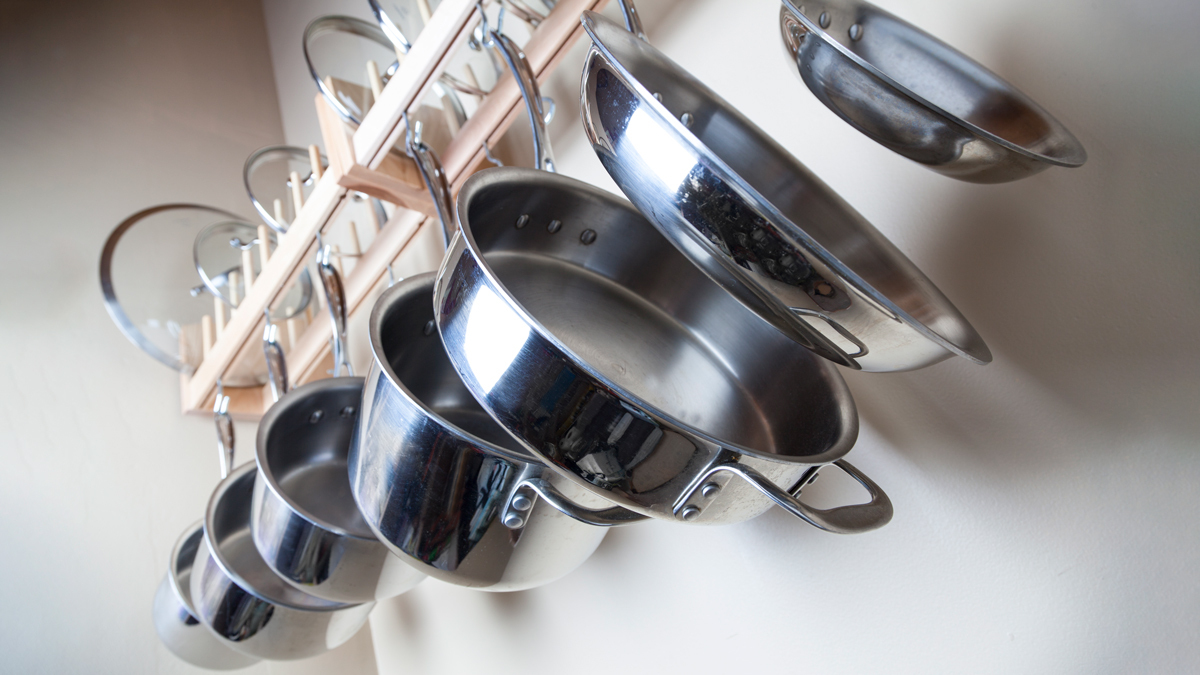
Are your kitchen cupboards full of pots and pans with wobbly handles and mismatched lids? Does more of your meal end up fused to the bottom of your saucepan than on your plate? Sounds like a new cookware set is in order.
We look at whether or not they’re good value, what you can expect to pay and any useful features to look out for when topping up your cookware collection.
Are cookware sets good value?
Cookware sets can seem like a bargain, but don’t be swayed by the number of pieces on offer. Think about whether you’ll actually use all the pots and pans. It may be more practical to buy individual pieces, and you may not end up saving all that much either.
“Manufacturers can add pieces such as steamers or skillets just to increase the number of pieces you get to make it look like you’re getting value for money,” says CHOICE home economist Fiona Mair. “Really, these pieces may be unnecessary and take up too much of your cupboard space.”
When it comes to cooking performance, price or brand generally has little impact
Sets from major brands like Anolon, Baccarat, Circulon, Raco or Tefal can range from $100 to more than $1000 depending on the number of pieces and the quality of the material. But many retailers frequently sell well under the recommended retail price. Some cookware sets may even be exclusive to a particular retailer.
It’s important to check whether the pan sizes match your cooktop’s cooking zone size, and if you have an induction cooktop, we recommend buying induction-compatible cookware.
Be aware, too, that the quality of the sets may vary. For example, a ‘starter pack’ or ‘basic’ set could be great value for students setting up a new home away from home, but the pans may have a cheaper aluminium core, rather than a copper one, and may not last as long as a ‘premium’ offering.
What you should get in your cookware set
A typical 10-piece set (including lids) comprises:
two different-sized saucepans with lids, ranging from 16–18cm
two frying pans, ranging from 20–26cm
a stockpot with lid
a sauté pan with lid.
These are usually made of the same material (e.g. stainless steel, non-stick).
Fiona has a recommended list of must-have cookware pieces for novices and experts alike.
Item
Typical cost
Good for
Large Dutch oven (6L)
$50–500
Stove-to-oven slow cooking, casseroles, baking bread. Major brands include Baccarat, Chasseur, Fiskars, Le Creuset, Lodge and Staub.
Large non-stick and/or stainless steel frypan (26 or 28cm)
It really depends
on the model, which is where CHOICE’s unbiased product reviews come in. Our experts compare dozens of induction-compatible saucepans and frypans in our test kitchen, from budget Kmart pans to offerings from Anolon, Baccarat, Circulon, Essteele, Pyrolux, Scanpan, Raco and Tefal. They assess cooking performance across a range of foods as well as how easy the cookware is to use and clean.
When it comes to cooking performance, price
or brand generally has little impact on our results. When we test non-stick frypan
durability (which involves 10,000 passes of a scourer with a 10kg weight
attached) we still get very good results for some pans that are half the price of others.
Sauté pans are ideal for one pot meals like risotto and stroganoff.
What are the cookware material options?
How your saucepan performs depends on how it’s made and what it’s made from. If you have an induction cooktop, you need to make sure any cookware you buy is induction compatible. Check out our induction cookware buying guide for more details.
Otherwise, these are your main options.
Stainless steel
A popular choice because it’s strong, hard, non-corrosive and affordable, but stainless steel cookware doesn’t conduct heat well, so it’s often combined with aluminium or copper in multi-layered bases, which are better at conducting and dispersing heat.
Quality pots are usually made of top-grade stainless steel (18/10), which contains 18% chromium (added for rust resistance) and 10% nickel (for acid resistance). Stainless steel with 8% nickel (18/8) is similar in properties to 18/10.
Aluminium
Aluminium pots conduct and retain heat very well, are lightweight, don’t rust and tend to be cheap, but they heat up over the total pan surface so some food may stick to the sides. Aluminium can also pit if you leave moist food in it, which can cause it to leach into your cooking. Anodising can help to prevent this.
Copper
Copper saucepans conduct heat well and allow precise temperature control, heating up and cooling down rapidly. Copper looks good but isn’t easy to keep clean and needs to be coated so it won’t contaminate the food.
Cast iron
Cast iron saucepans have a very even heat transfer at low settings, but take longer to heat up and cool down. Iron is very heavy, and it can rust and become brittle. While enamel coatings can help stop rust, they can chip if handled roughly.
Non-stick
Non-stick frypans and pots don’t always seem to have full induction coverage along the base of the cookware so may not always provide even heat distribution. Pots and pans with non-stick coatings should only be heated on low to medium heat and you should avoid metal utensils and scourers during use and cleaning.
Ceramic
Ceramic saucepans have natural non-stick properties as well as even heat distribution when used on low to medium heat. Like non-stick cookware, you should avoid metal utensils and scourers during use and cleaning.
Cooking at high temperatures will damage frypans with non-stick coatings over time.
Features to look for
Size
A saucepan should suit the size of your cooktop elements, especially if you have a ceramic or induction cooktop.
Base
A heavy base helps with heat distribution and cooking performance. Aluminium and copper conduct heat well, so they’re often used for the core of the base (the disc).
Lid
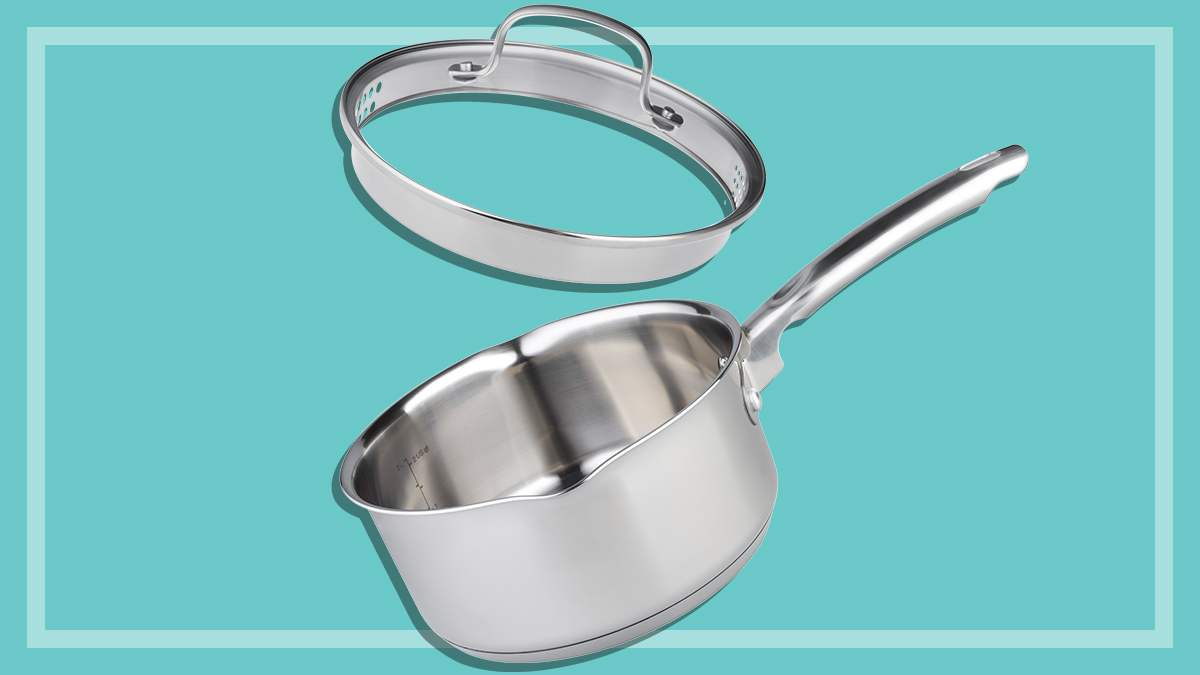
A glass lid lets you keep an eye on the cooking without releasing heat and moisture.
Lip
A shaped lip or spout makes pouring easier.
Handle
A comfortable, moulded handle should be securely attached and stay cool to the touch during cooking. An extra support handle helps with lifting larger, heavier pans.
Weight
If a saucepan is heavy when empty, bear in mind it’ll be much heavier when it’s full.
Induction cooktops
Induction cookware has a ferrous metal base and must fit one of the elements perfectly. It’s worth checking the manufacturer’s recommendations.
Kim Gilmour is a Senior project officer. She manages a range of product tests such as coffee machines, stick vacuums, bassinets, high chairs and ovens, which are all tested in our in-house labs.
Kim’s work gives people access to robust, independent advice and helps consumers make informed decisions about their purchases. Her work also helps to keep manufacturers in check, by regularly exposing product flaws which can result in better and safer products.
Prior to CHOICE, Kim spent 16 years working as a technology journalist in Sydney and London. With several years as a senior researcher/writer at our UK sister organisation, Which?.
Kim has authored how-to technology books such as Spotify for Dummies and Digital Photography for the Older and Wiser.
Kim has a Bachelor of Arts in Communication (Journalism) from Charles Sturt University.
Find Kim on LinkedIn.
Kim Gilmour is a Senior project officer. She manages a range of product tests such as coffee machines, stick vacuums, bassinets, high chairs and ovens, which are all tested in our in-house labs.
Kim’s work gives people access to robust, independent advice and helps consumers make informed decisions about their purchases. Her work also helps to keep manufacturers in check, by regularly exposing product flaws which can result in better and safer products.
Prior to CHOICE, Kim spent 16 years working as a technology journalist in Sydney and London. With several years as a senior researcher/writer at our UK sister organisation, Which?.
Kim has authored how-to technology books such as Spotify for Dummies and Digital Photography for the Older and Wiser.
Kim has a Bachelor of Arts in Communication (Journalism) from Charles Sturt University.
Find Kim on LinkedIn.
Rebecca Ciaramidaro is a Content producer in the Household team at CHOICE. Rebecca writes about a wide range of children's and household products, ranging from cots and strollers to ovens, BBQs, espresso machines and electric blankets. And also grocery items such as nappies, sanitary pads and laundry detergents.
Previously at CHOICE, Rebecca worked as a Test officer in the kitchen lab.
Rebecca has a Bachelor of Science (Nutrition and Food) from the University of Western Sydney.
Find Rebecca on LinkedIn.
Rebecca Ciaramidaro is a Content producer in the Household team at CHOICE. Rebecca writes about a wide range of children's and household products, ranging from cots and strollers to ovens, BBQs, espresso machines and electric blankets. And also grocery items such as nappies, sanitary pads and laundry detergents.
Previously at CHOICE, Rebecca worked as a Test officer in the kitchen lab.
Rebecca has a Bachelor of Science (Nutrition and Food) from the University of Western Sydney.
Find Rebecca on LinkedIn.
For more than 60 years, we've been making a difference for Australian consumers. In that time, we've never taken ads or sponsorship.
Instead we're funded by members who value expert reviews and independent product testing.
With no self-interest behind our advice, you don't just buy smarter, you get the answers that you need.
You know without hesitation what's safe for you and your family. And our recent sunscreens test showed just how important it is to keep business claims in check.
So you'll never be alone when something goes wrong or a business treats you unfairly.