It’s either a marketing triumph or scam, depending on who you ask. Bottled
water is a product people are happy to pay top dollar for – despite most
Australians having access to safe drinking tap water at a
fraction of the price.
So why is bottled water so popular, when it costs more and is bad for the environment? It seems many people think bottled water is more “pure”, seemingly drawn in by label images of natural springs and pristine mountains.
The rise of bottled water
According to research conducted by Roy Morgan in 2015, 5.3 million
Australians consumed bottled water in any given seven days – an increase on
2014, when only 4.9 million of us drank it in the same period.
Australians under the age of 50 are more likely to consume bottled water,
with the beverage most popular with 25–34 year olds.
As a result, beverage companies raked in an estimated $700 million plus
from sales of bottled water last year. But in a country that has some of the
safest drinking water in the world – why is bottled water so popular?
Bottled water is no better at hydrating you than tap water, and it’s not
any healthier. Blind taste tests have also shown most people can’t even
tell the difference between bottled water and tap water. It’s bad for the
environment and it costs almost 2000 times the price of tap water.
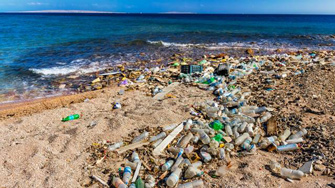
Bottled water is often consumed away from home and not recycled, so it ends up dumped in the bin or ends up as litter.
Plenty of water utilities around Australia run “Choose tap” programs and spruik the benefits of tap water, but often the primary focus of these campaigns is on tap water being the best choice for your hip pocket and the environment.
Many Australians do drink tap water primarily (give or take the odd bottle of water on the run for the sake of convenience), according to research done by Sydney Water, the state-owned company that provides drinking water and other water services across Sydney. But the number of people who say they only drink bottled water 100% of the time is still high. In the Sydney area alone, Sydney Water reports that almost half a million people say they only drink bottled water.
Why Australians opt for bottled water
Sydney Water’s research showed that convenience, cost and environmental impact were all secondary considerations when it comes to choosing bottled water.
The key influencer for people’s decision to choose bottled over tap was perception of the water quality. Many of the respondents found the imagery of clean and natural sources displayed on the bottled water packaging far more reassuring than that of dams, pipes and taps.
Some comments from this group included: “I’m more about the image of the brand than the quality of the water”, “anything marketed is legit” or “a company couldn’t legally sell something if it wasn’t great quality”.
Many respondents said they loved the idea that bottled water comes from a natural spring or a mountain in Switzerland. There was a perception that this water is clean, pure, high quality, and has been filled up directly at the source.
The water supplier Queensland Urban Utilities carried out a similar survey on bottled water use. Their key findings included:
35% of respondents prefer bottled water over tap water.
Of those that said they preferred bottled water:
47% said it was for the taste
38% believed bottled water is better quality
19% said that bottled water is better for their health
18% said they know what’s in bottled water.
In Victoria, Yarra Valley Water also conducted research. Its study found that while 79% of those surveyed felt that tap water should be more accessible, of the 38% who said they didn’t consume tap water when they were out and about due to accessibility, 24% said they would not choose tap water anyway – even if it was easily available.
So just how have people come to the conclusion that bottled water is safer than tap water?
Donna Lewis, acting engagement, education and partnerships manager at Sydney Water says,“Our research found that the perception of water quality is the primary driver for choosing bottled water over tap. The reasons for this association are numerous, but much of it comes down to clever marketing campaigns by bottled water distributors.”
Lewis says that Australia’s bottled water industry has successfully used marketing tactics to artificially manufacture consumer demand. “By telling consumers the safest drinking water comes from a bottle, beverage companies indirectly imply that tap water is unsafe and can’t be trusted.”
The good news is that the majority of us don’t have to worry about getting
sick from our drinking water. And it’s widely agreed among experts that
Australia has some of the best tap water in the world.
The Australian Drinking Water Guidelines specify that tap water “should
contain no harmful concentrations of chemicals or pathogenic
micro-organisms, and ideally it should be aesthetically pleasing in regard
to appearance, taste and odour”.
Water authorities use filtering, settling, coagulation and disinfecting to
ensure the safety of drinking water. They also use sufficient disinfectant
to stop the re-growth of microorganisms as the water travels through the
pipe system to the tap.
Additionally, water utilities monitor the water quality 24 hours a day,
seven days a week, and conduct thousands of tests each year to ensure
quality and safety.
Is bottled water safer?
Tap water needs to meet more stringent quality criteria than bottled water.
According to Stuart Khan, an expert in drinking water quality, anyone in
Australia who is under the impression that bottled water is safer than tap
water is very much “mistaken”.
Khan, who is an associate professor of Civil and Environmental Engineering
at the University of NSW, says that tap water and bottled water are
regulated differently; tap water needs to meet much more stringent quality
criteria and is monitored far more carefully than bottled water.
Bottled water is considered a packaged food and is regulated by Food
Standards Australia and New Zealand (FSANZ) via the Food Safety standards
and is enforced by state- and territory-level food authorities.
Bottled water producers that are part of the Members of the Australasian
Bottled Water Institute (ABWI) must also comply with their own industry
code. According to the ABWI, the code is a set of standards for the safe
processing of bottled water and requires testing once a year. However,
joining the ABWI is voluntary.
According to Khan, while both products are likely to be safe in Australia,
and both provide water using a risk management process, bottled water
manufacturers (unlike the water utilities) are generally likely to have
less control over the catchment where they source their water.
He says that while bottled water companies can do a site survey on their
land and make an assessment that it’s safe, they can’t prevent activities
offsite but nearby. “This is a commercial enterprise so they are looking
for somewhere that is clean and pristine, they can’t put in the sort of
large scale catchment activities that a larger water utility can.”
As for bottled water being completely pristine, Dr Peter Cox, principal advisor on public health at Sydney Water, says that even if you take the
cleanest water out of a spring, microorganisms will change the water
quality. “People like to believe bottled water is pure, straight from
nature, with no human intervention, but it has to be treated.”
The study found plastic in 93% of the samples analysed that were from 250 bottles of water in Brazil, China, India, Indonesia, Kenya, Lebanon, Mexico, Thailand and the United States and were contaminated with plastic including polypropylene, nylon, and polyethylene terephthalate (PET).
The research found that the microplastic in the water was coming from processes to do with bottling or from the cap itself.
Bottled water manufacturers: as transparent as mud
While water utilities in Australia are upfront about where their tap water
is sourced from, when it comes to bottled water things are murkier.
We contacted the manufacturers of some of Australia’s highest-selling
spring water brands to ask where their water was sourced.
Coca Cola Amatil – who produce Mount Franklin and Pump – responded that all
of its water brands are sourced locally within each state from springs that
are as close as possible to the bottling facilities. However, they said
they’re unable to disclose the actual addresses, citing privacy.
A spokesperson from Asahi, which own the brands Frantelle and Cool Ridge,
says that their product is sourced “locally” but provide little more information.
A spokesperson from Coles says they don’t disclose the location of the spring water source on the label of the bottles, but that they work with two Australian suppliers across five sites in Queensland, NSW, Victoria and WA to source the water. However, the specific locations were not supplied.
Poland Spring Water: a “colossal fraud”?
Nestle’s best-selling bottled water brand in the USA – Poland Spring – is
“a colossal fraud” according to a class-action lawsuit filed this August.
The lawsuit alleges that instead of spring water, the brand has been selling
common groundwater to customers instead.
According to the lawsuit, unknown to the general public, one or more wells
at each of Nestle Waters’ six largest volume groundwater collection sites in
Maine – which recently have collectively supplied up to 99% of the water in
Poland Spring Water products – are near a present or former human waste
dump, refuse pit, landfill, ash pile, salt mound, farm where pesticides
were previously used, fish hatchery or toxic petroleum dump site.
While there are no concerns that the water is contaminated, the lawsuit
maintains the company’s claims are misleading because the water comes from
wells in low-lying populated areas near potential sources of contamination,
while consumers expect ‘spring water’ to come from a naturally occurring
spring and pay premium prices as a result.
A statement from Nestle says that the claims made in the lawsuit are
without merit and that the product meets the U.S. Food and Drug
Administration regulations defining spring water.
Australian Artesian Water: what’s really in it?
While there’ve been few issues safety-wise in Australia from the tap or
the bottle, people who choose bottled water under the impression that it’s
more trusted may be surprised by what we found with one local bottled water
brand.
Australian Artesian Water claims its bottled water is sourced from the great artesian basin in northern NSW and is “full of
mineral salts that are quickly absorbed by your body, replenishing and
cleansing”. While not a large brand, it is available at a number of
retailers in Sydney at the time of publishing.
CHOICE received a tip-off that the product inside the bottle may not be
what’s claimed on the label. We sent two samples of the product to the
National Measurement Institute to
see if the contents of the bottle matched the typical analysis provided on
the label.
What we discovered from the testing is that the water in the bottle did not
match the label at all. We then asked an external expert to take a look at
the results and he confirmed that the water in the bottle “couldn’t be more
different” to the type of water claimed on the label – it’s “not even
close”.
He said that the “typical analysis” provided on the label not only bears no
resemblance to the water inside but that the water inside appears to have
been treated by reverse osmosis, which has removed almost all of the ionic
constituents. In short, this means it’s impossible to know where the water
was originally sourced.
While our expert confirmed that the water was not a health risk, he says
that the claimed contents are misleading and that the purported benefits of
the mineral contents that are being claimed just don’t apply to the actual
water inside the bottle.
In fact, for all the claims of minerals and salts made by Australian
Artesian Water, the plain old Sydney tap water we had tested along with it actually contained more minerals than the bottled water brand!
We also spotted another unusual bottled water brand on sale at a
major Sydney Hospital, of all places.
Zouki Breathe oxygen-infused water was being advertised in the foyer café
of Royal Prince Alfred Hospital with a large poster proclaiming benefits
such as “energy levels”, “vitality”, “endurance”, “mental focus” and
“recovery”. The product itself was on sale inside the nearby cafe.
The water, which claims to be directly sourced from a spring in Ballarat and featuring one of the “highest concentration levels of oxygen in any spring
water in Australia”, costs $3.50 for a 575ml bottle. So is oxygen-infused
water any better than regular water?
Our drinking expert Stuart Khan is blunt. “Oxygen water is a rubbish idea.” He explains that once you extract water from underground, the dissolved oxygen concentrations quickly establish a balance with atmospheric levels.
In fact, he adds that tap water (especially if it has been chlorine
disinfected) is just as as highly oxygenated as any groundwater could be.
And when it comes to water quality? Khan says if a spring water claims to
be “highly oxygenated”, this suggests it’s been sourced from close to the
surface, rather than from a deep and confined aquifer – which would mean
the water is actually more vulnerable to contamination.
Water worries?
If you’re concerned about the contents of your bottled water or something doesn’t seem right you can contact the manufacturer or the health authorities in your state.
If your tap water looks, smells or tastes strange, or if your clothing and
plumbing (such as sinks and toilets) become stained, here are some
suggestions for what to do next.
Ask your neighbours if they have similar issues to try to work out if
it’s a general supply problem or one caused by your home’s plumbing.
Talk to your water supplier about your concerns. If you’ve recognised a
potential problem, tell them – it may help them assess and solve the
problem more quickly. Ask them for the latest analytical results of
your water supply and the corresponding Drinking Water Guidelines
recommendations. If you still have doubts, get a water sample analysed.
Your supplier may analyse a sample free of charge, especially if there’s a
health concern.
Your water supplier may be able to solve some aesthetic problems fairly
easily by flushing the mains, while other problems may require more
extensive cleaning or repair of the distribution system in your area,
or work on your home’s plumbing.
If you’ve suffered damage (for example, rust-spotted clothes after a
wash), you may be able to negotiate compensation from your supplier.
For more than 60 years, we've been making a difference for Australian consumers. In that time, we've never taken ads or sponsorship.
Instead we're funded by members who value expert reviews and independent product testing.
With no self-interest behind our advice, you don't just buy smarter, you get the answers that you need.
You know without hesitation what's safe for you and your family. And our recent sunscreens test showed just how important it is to keep business claims in check.
So you'll never be alone when something goes wrong or a business treats you unfairly.