To answer these
questions – and with the added incentive of losing some extra pudge around
the middle – I tried out the keto diet for two weeks.
CHOICE verdict
While the ketogenic diet may be an appropriate short-term solution under strict supervision for some, and it can result in weight loss, it could lead to serious health complications over time.
Going on the ketogenic diet made me realise I still held onto the belief that fats are the enemy. But good fats are vital for optimal health, so I’ll be keeping the olive oil dressings and lashings of avocado in my diet, while definitely eating less bacon.
What is a ketogenic diet?
The ketogenic diet was developed as a treatment for epilepsy in 1924 by Dr
Russell Wilder at the Mayo Clinic. Research has found the diet to be
effective in reducing the frequency and severity of seizures in patients
with severe epilepsy, but many people, including Hollywood’s A-list, have
adopted the extreme diet for quick weight loss.
The keto diet involves eating very small amounts of carbohydrates, medium
amounts of protein, and getting most of your daily kilojoules from fats.
Carbohydrates are the body’s preferred source of energy.
Ketones replace carbs as the body’s main energy source, meaning it runs almost entirely on stored fat
When we starve the
body of carbs, ketone bodies (or ketones) are produced by the liver from
fat, and used as fuel for the brain and body. So on a ketogenic diet,
ketones replace carbs as the body’s main energy source, meaning it runs
almost entirely on stored fat.
Ketones are also produced when your total kilojoule intake is low, because when
you run short of stored energy your body will burn stored fat instead,
resulting in weight loss. This process is referred to as being in the
‘state of ketosis’.
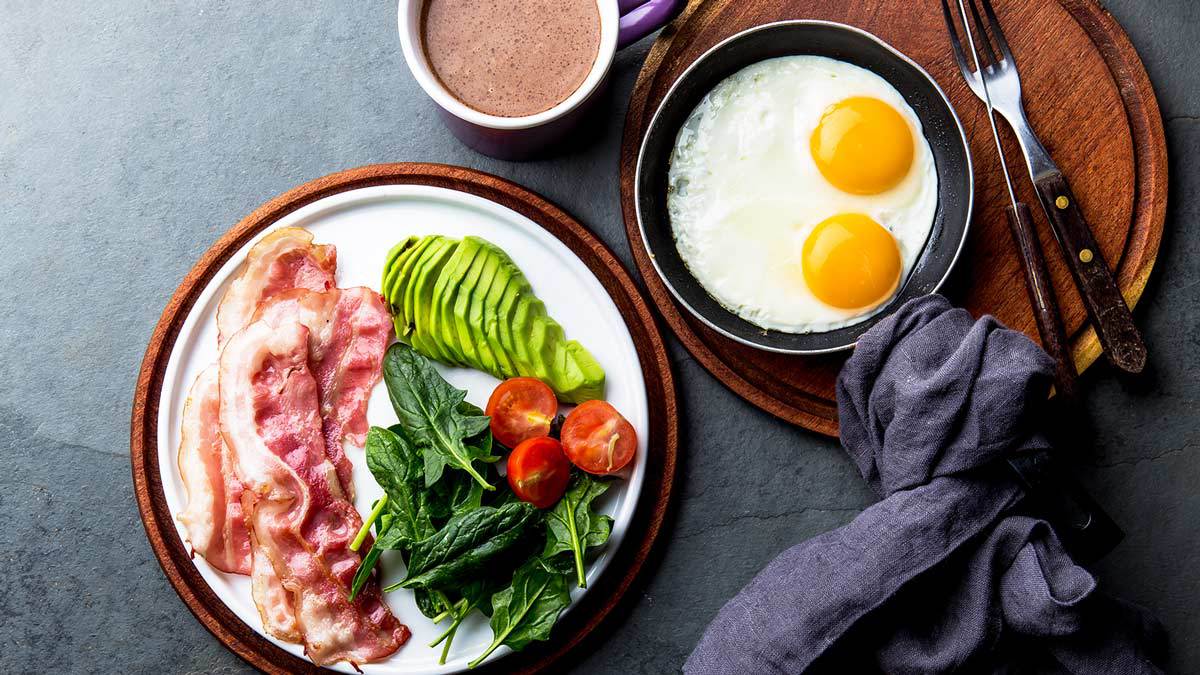
Avocado and eggs are popular keto-friendly foods.
What the expert thinks
According to Professor Clare Collins, an accredited practising dietitian and spokesperson for the Dietitians Association of Australia, there’s a whole range of dietary approaches that come under that
‘ketogenic diet banner’.
“The classical ketogenic diet has a ratio of 4g of fat to 1g of
combined carbohydrates and protein. So basically it’s 85 to 90% fat, [which]
isn’t a palatable or exciting diet, as you can imagine, due to the massive
restriction in types and quantities of foods that contain carbohydrates,
including breads and cereals, fruit, some vegetables and even dairy
products.”
Professor Collins stresses that “the ketogenic diet should not be
considered flippantly as something that anybody and everybody should be
following. The individual needs to be under the supervision of a doctor and
dietitian and be monitored for side effects, particularly if they’re on
medications.”
The keto diet limits carbohydrates to just 20–50g a day. A single slice of
bread typically has 15g of carbohydrates, so you can imagine how
restrictive this form of eating can be.
The diet – or popular adaptations of it that you’ll find in books and on
the internet – suggests consuming high volumes of animal products (so
vegans and vegetarians may find this diet very difficult to follow) with a
variety of the following foods:
Text-only accessible version
Ketogenic-friendly foods
Proteins – beef, lamb, poultry, pork, fish and seafood, eggs, tofu (if you are vegetarian).
I fire up Uber Eats more than my stovetop, so this diet was a drastic change
for me. Keto requires a lot of planning and preparation, which may be a
deterrent for some.
On day one I did a massive food shop, drawing
inspiration from low-carb recipes I found
online. My trolley was filled with meat (so much meat), cheese, butter and
high-fat dairy – basically a lot of foods I don’t normally allow myself.
I
also bought loads of the ‘allowed’ vegetables and fruits as nutrient
deficiencies can occur on diets that are too restrictive. I also picked up
a multivitamin supplement.
The biggest challenge of this diet was the lack of variety – and the enticing allure of carbs at every turn
The kilojoule-counter app MyFitnessPal helped me track how
many carbohydrates I was consuming and kept my kilojoule intake in check.
But the biggest challenge of this diet was the lack of variety – and the
enticing allure of carbs at every turn. I was ready to throw in the towel on
day four when a cafe owner refused to make me a bacon and egg roll without
the roll. “What am I meant to eat?” I blubbered. In fact, studies in keto
diets have found attrition rates are one of the highest challenges of the
diet.
When starting the keto diet, people also report initially getting the ‘keto
flu’ from eliminating carbs from the diet, with symptoms such as headaches,
fatigue, brain fogginess and nausea. I didn’t experience any major issues
and actually felt quite sprightly (besides my aforementioned meltdown)
during my first week on the high-fat diet.
After imagining I’d have a Biggest Loser-type reveal, after two
weeks on the diet I was disappointed to find I’d only lost 1.5kg. But I
was pleasantly surprised by the lack of hunger I experienced. For example,
if I started the day with bacon and eggs, I wouldn’t get hungry again till
the afternoon, whereas my typical instant oats breakfast leaves me ravenous
by 11am.
I was pleasantly surprised by the lack of hunger I experienced
A 2008 study published in the American Journal of Clinical Nutrition compared a
medium-carbohydrate, high-protein diet with a low-carbohydrate ketogenic diet and
found that after four to six weeks the 17 subjects lost significantly more weight
and were less hungry on the ketogenic diet than the medium-carbohydrate diet.
The most common side effect of the diet is constipation as a result of
cutting out vital sources of fibre in the diet – fruits, vegetables, beans
and grains. Lack of fibre can also increase the risk of bowel cancer and
heart disease in the long term. I negated this by drinking lots of water,
eating plenty of the high-fibre ‘allowed’ vegetables and taking a fibre
supplement.
Other possible side effects of long-term adherence to the diet include:
raised cholesterol levels
renal stones
poor growth (in children)
reductions in bone density
altered immune function
altered liver function
nutrient deficiencies.
Although little research has been done specifically around the diet’s
long-term effects, some studies suggest there are health benefits in
following such a strict low-carbohydrate diet, such as its ability to
improve type 2 diabetes
and shrink some forms of brain cancer. But more research on humans is needed and, as Professor Collins
warns, this diet is used in medical nutrition therapy as a short-term test
diet for specific medical conditions such as epilepsy and should only be
used medically under the supervision of experts.
Professor Jennie Brand-Miller, professor of human nutrition at the
University of Sydney says, “There’s not a lot in the scientific literature
to judge [the health effects of the keto diet]. On the basis of current
science, I wouldn’t recommend it. Several observational studies suggest
this diet [actually] increases mortality, diabetes and cardiovascular
disease.”
For more information on how the ketogenic diet can help treat epilepsy, visit
Epilepsy Action Australia.
Tips for sustainable weight loss
If you’re looking for a sustainable weight-loss solution, Professor Collins says visiting your GP should be your first port of call.
“They will measure your blood pressure, blood lipids and blood glucose, and potentially look at kidney function and liver function,” she says. “You should ask to be referred to a dietitian as well.”
Your GP and dietitian will then assess your current state of health, weigh up the positives and negatives of different weight-loss regimes and recommend the appropriate one for you.
Rather than letting fad diets deprive your body of essential nutrients,
simple lifestyle changes can help you not only lose weight, but also
maintain it in the long term.
Go slow and steady – aim to lose 0.5–1kg a week. Any
more than that and you’re probably losing water and muscle, not fat.
Avoid high-glycemic index foods (sugary treats and highly-processed
foods)
– “They stimulate insulin secretion and drive fat deposition and they
aren’t as satiating,” says Professor Brand-Miller.
Fill up on fruit and veg – they’re bursting with
phytonutrients and an analysis of three weight-loss studies of more than 130,000
adults found those who increased their intake of high-fibre, low-GI fruit
and vegetables (your leafy greens over your stodgy potatoes) were more
likely to lose or maintain weight.
Drink plenty of water – sometimes when you feel hungry,
you’re actually dehydrated, so keep a water bottle nearby to keep you
hydrated during the day.
Up your exercise – according to a US study called the
National Weight Control Registry, 90% of people who’ve lost an average of 30kg and kept it off for over five
years exercise for an average of one hour a day.
Start the day with a healthy breakfast – that same study
found 78% of respondents eat breakfast every day.
Watch your portions – eating from smaller plates can help keep portion sizes in check. A US
study found that switching from a 10-inch to a 12-inch dinner plate (equivalent
to switching from a 25cm to 30cm plate) caused people to consume 22% more
kilojoules during a meal.
Experiment with herbs and spices – you don’t need sugary
dressings or sauces to add flavour. Try lemon, chilli, garlic, herbs and
spices for heaps of flavour without adding kilojoules.
Cut back on ultra-processed foods and drinks – healthy
wholegrain carbs are not the enemy, but junk food certainly is, says
Professor Collins. “In Australia, one third of our total daily kilojoule
intake comes from ‘discretionary choices’.” Always being prepared with
healthy snacks is a great way to stop you from going to the vending machine
mid-afternoon.
For more than 60 years, we've been making a difference for Australian consumers. In that time, we've never taken ads or sponsorship.
Instead we're funded by members who value expert reviews and independent product testing.
With no self-interest behind our advice, you don't just buy smarter, you get the answers that you need.
You know without hesitation what's safe for you and your family. And our recent sunscreens test showed just how important it is to keep business claims in check.
So you'll never be alone when something goes wrong or a business treats you unfairly.