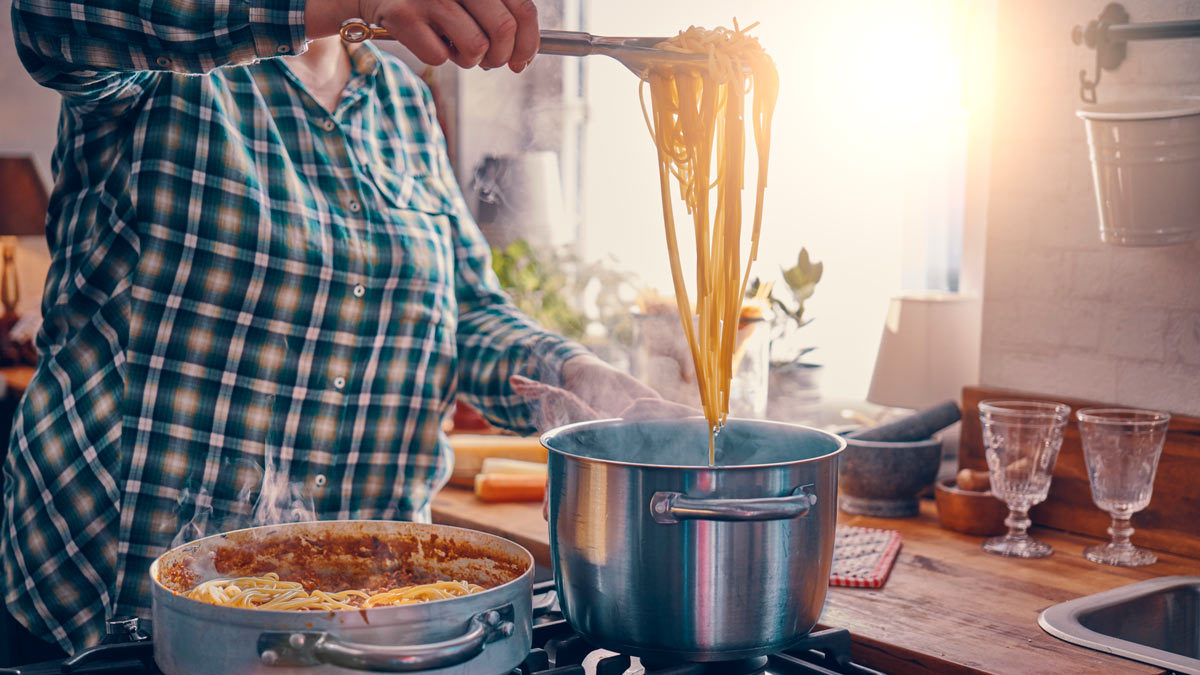
Peer into any kitchen pantry and chances are you’ll find a pack or two of pasta. Pasta meals are on high rotation in many households, particularly when kids have a say in the weekly meal plan. And Australians spend about $226 million on this pantry staple each year.
While there’s an abundance of pasta shapes and styles to choose from, durum wheat spaghetti is the most popular, according to a recent survey of our Voice Your Choice members. And there are plenty of durum wheat spaghettis to choose from in the supermarket.
So which spaghetti should you pair with your bolognese, carbonara or marinara? We put 24 spaghettis through their paces to find the best.
Best spaghetti
The spaghettis we tested are made from essentially just one ingredient, durum wheat semolina, and any variation in taste between products is extremely subtle.
So in order to more readily differentiate between spaghettis, we instead considered:
nutrition – what’s their Health Star Rating?
performance – does the labelled cook time result in perfectly ‘al dente’ pasta?
The resulting scores across the category as a whole were fairly high – the lowest score a still respectable 74%. (See more about our scoring in How we test.)
But for ultimate spaghetti satisfaction, we recommend products that received an overall score of 90% or more. Eleven products make that list.
Recommended
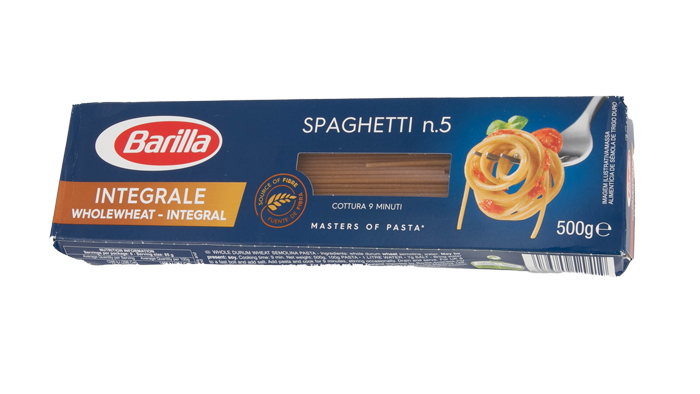
Barilla Wholewheat Spaghetti n.5
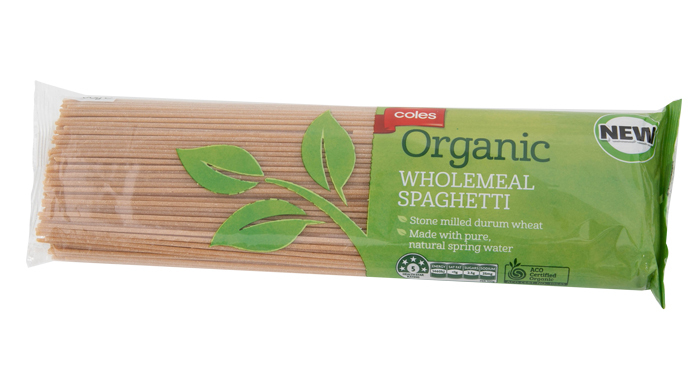
Coles Organic Wholemeal Spaghetti
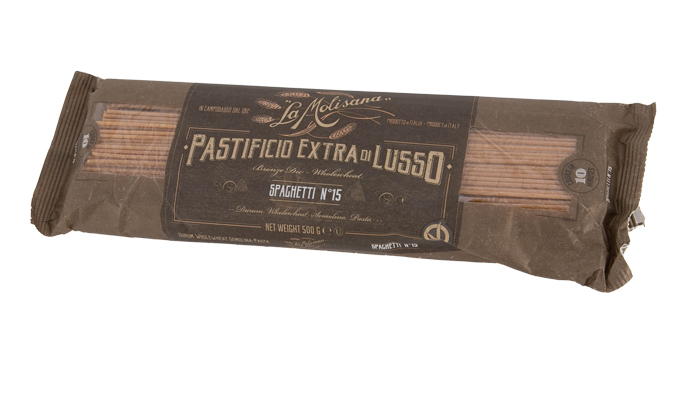
La Molisana Pastificio Extra Di Lusso Wholewheat Spaghetti No15
Good to know: This spaghetti is wholemeal and certified organic
La Molisana Pastificio Extra Di Lusso Wholewheat Spaghetti No15
CHOICE Expert Rating: 100%
Price: $3 for 500g pack ($0.60 per 100g)
Country of origin statement: Product of Italy
Good to know: This spaghetti is wholemeal and is the most expensive product on test
To see results for all 24 spaghettis, check out our full pasta review.
Buying based on price
For a product that’s just one ingredient, what you pay for it can vary widely.
The products we tested cost from 80c per 500g pack (the basic supermarket brands: Aldi’s Remano, Woolworths Essentials, Coles, IGA’s Black & Gold) up to $3 (La Molisana Pastificio Extra Di Lusso Wholewheat Spaghetti No15, imported by Woolworths) – almost four times the price.
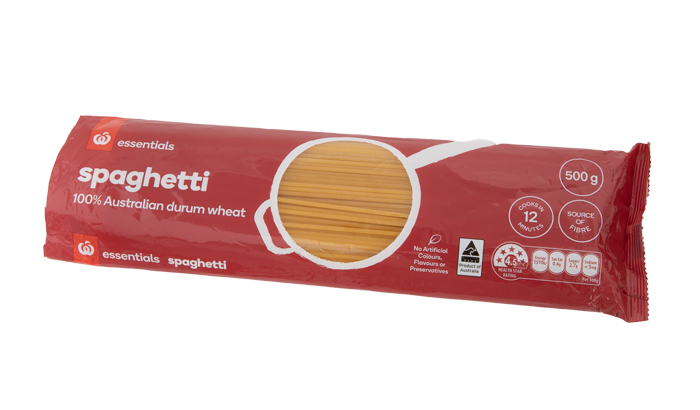
For the cheapest spaghetti, that’s also among our highest scoring, you can’t go wrong with Woolworths Essentials Spaghetti.
Roughly half the spaghetti in our test was made in Italy, the other half in Australia, and its origin didn’t appear to have any bearing on the overall score.
Here’s the breakdown:
Text-only accessible version
Spaghetti country of origin
Australia
Aldi Remano Spaghetti
Balducci Spaghetti No.4
Coles Spaghetti (blue pack)
Coles Spaghetti (clear pack)
IGA Black & Gold Spaghetti No.5
IGA Community Co Spaghetti No.5
San Remo Spaghetti No.5
San Remo Wholemeal Spaghetti No.130
Vetta Smart Pasta Fibre Spaghetti
Vetta Spaghetti
Woolworths Essentials Spaghetti
Woolworths Spaghetti
Italy
Aldi Just Organic Spaghetti
Barilla Spaghetti n.5
Barilla Wholewheat Spaghetti n.5
Coles Organic Spaghetti
Coles Organic Wholemeal Spaghetti
Cucina Matese Spaghetti No.113
Garofalo Spaghetti No.9
La Molisana Pastificio Extra Di Lusso Wholewheat Spaghetti No15
Possibly the biggest decision faced when choosing pasta in the supermarket is whether to buy long or short varieties, and this tends to come down to the sauce you’ll be serving it with.
Of course you can pair pasta with any sauce you like, but in general:
Short pasta (penne, farfalle, fusilli, macaroni, shells etc.), which you stab with a fork to eat, works well with chunkier sauces that include ingredients such as beans, roasted vegetables, or olives. The nooks and crannies of the pasta can help trap sauce, and your fork stabbing can also pick up the larger sauce ingredients.
Long pasta (spaghetti, fettuccine, tagliatelle, pappardelle etc.), which you twirl, works well with a smoother sauce with finer ingredients like ground meat or chopped herbs that can coat the pasta strands.
Pasta ingredients
Pasta is most commonly made from durum wheat semolina, essentially wheat flour, sometimes with egg thrown in. But pasta based on alternative flours are also commonly available.
The different flours used can affect both nutrition and price.
Wheat-based pasta
Most wheat pastas are nutritionally similar, although the fibre content of wholemeal pasta is higher. One product we tested, Vetta Smart Pasta, has oat fibre added, but you still get more fibre in wholemeal pasta.
The protein content of wheat can also vary depending on wheat variety and environmental factors such as soil type and where the wheat is grown, so the protein content of pasta can also vary slightly.
Price varies significantly between brands and products. The spaghettis in our test ranged in price from $0.16 to $0.60 per 100g.
Wheat-free pasta is made with flour from a range of different grains and pulses including corn (maize), rice, chickpeas, soybeans, borlotti and edamame (soy) beans and lentils.
One of the key benefits of wheat-free pastas is that they’re usually gluten-free, so they’re suitable for people who are coeliac or have a gluten intolerance. But how do they compare to regular pasta?
Nutritionally, pastas based on pulses and legumes in particular are a good option. They’re higher in fibre than both rice- and corn-based pastas and also regular (non-wholemeal) wheat pastas. They’re also higher in protein.
Wheat-free pastas are, however, more expensive than regular pasta. The average price of the pasta in our test was $0.36 per 100g, compared with an average of $1.63 per 100g for the selection of wheat-free pastas we bought from the supermarket – more than four times the price.
What do pasta numbers mean?
Have you ever noticed the different numbers on the packs of pasta, and wondered what they’re referring to?
At first glance they seem to refer to the thickness of the pasta, with the numbers increasing in size along with the size of the pasta. But in fact this ‘cut number’ is simply a numbering system – unique to each manufacturer – which helps to identify the type of pasta.
And although within brands the numbers tend to increase with the size of the pasta – spaghettini (thin spaghetti) with a smaller number than spaghetti, which in turn has a smaller number than spaghettoni (thick spaghetti) – the number of the same pasta cut may be different between brands.
This is why in our test, which only included spaghetti, we had a range of numbers – most commonly 3, 4 and 5 but also 6, 7, 9, 15, 113, 130, 220 and 225.
How to cook pasta
Prepare perfect pasta in just five simple steps:
Bring a large saucepan of water to boil on the stove
Add salt, then pasta
Stir to prevent sticking and clumping
Cook until al dente
Drain
Tips:
Use the same cooking method for both long and short pasta.
For every 500g pasta, use 5L water and 1 tablespoon salt.
Al dente means ‘cooked lightly so that it still offers resistance to the teeth’.
How to cook pasta in 5 simple steps
A great bolognese sauce is guaranteed to be a winner at dinnertime.
Spaghetti bolognese recipe
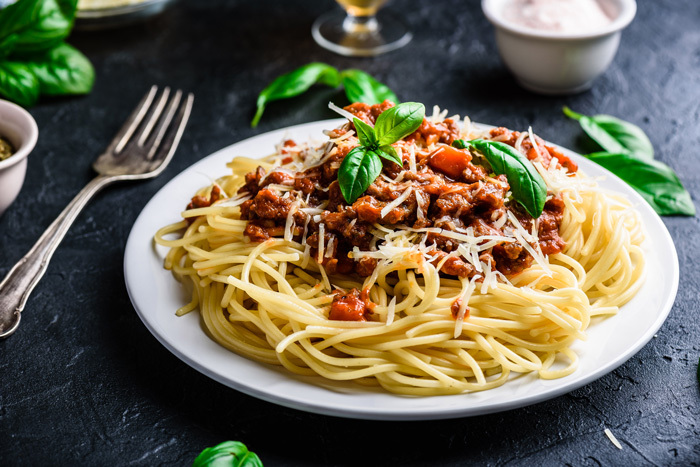
In Australia, spaghetti is synonymous with bolognese. But traditionally, bolognese sauce is dished up with wider long pastas such as tagliatelle, fettuccine or pappardelle which are better able to hold this rich, meaty ragu.
Whichever shape pasta you choose to serve it with, a great bolognese sauce will always result in a winner dinner. Fiona Mair, CHOICE home economist, shares her recipe, below.
Slow cook bolognese sauce
Ingredients
2 tbsp olive oil
1 tablespoon butter
1 large brown onion, finely chopped
1 carrot, peeled and finely chopped
1 celery stick, finely chopped
2 cloves garlic, finely chopped
500g pork mince
500g veal mince
½ cup red wine
700ml passata
400g can diced tomatoes
½ cup water
2 bay leaves
Parmesan cheese rind (optional)
Salt and pepper to taste
Method
In a large saucepan heat oil and butter on medium heat, fry onion, carrot, celery and garlic until soft.
Add pork and veal mince and continually stir until brown, breaking up any lumps.
Add wine and cook for 2 mins.
Add passata, canned tomatoes, water, bay leaves and parmesan cheese rind, salt and pepper.
Bring to a gentle boil, reduce heat and allow sauce to simmer with the lid on for 2 hours.
Remove the lid and cook for another 15 minutes or until the sauce is slightly thicker.
Serve with tagliatelle, fettuccine or spaghetti and grated parmesan cheese.
Serves 6
Tips
If the tomatoes are too acidic, add ½ cup milk.
Save and freeze the rind of parmesan cheese to add flavour to the sauce.
Freeze any leftover sauce – it can be used in a lasagna or pasta bake recipe.
Buy fresh parmesan cheese in a block and keep it in the freezer for when required.
This dish can be cooked in a slow cooker. Follow the recipe and add to the slow cooker bowl. Cook on a low setting for 8 hours or high setting for 5 hours.
How we test
Products
We tested 24 shelf-stable durum wheat spaghettis – both regular and wholemeal varieties – that are available in major supermarket chains. We excluded size/shape variations (e.g. thin/thick/spaghettini/spaghettoni, ‘quick cook’, tubular, linguine), egg pasta and wheat-free pasta.
Price is as purchased in Sydney stores (not on special) in September 2020.
Testing
Spaghetti was cooked in a large pot of boiling water using the standard manufacturer’s instruction for pasta – a ratio of 1 litre water to 100g pasta, for the time specified on the pack. It was stirred when water came back up to a boil, at 5 minutes, then again to 2 minutes before the end of cooking time (if longer than 10 minutes).
Once cooking time was reached, spaghetti was drained, and each sample was assessed for a) degree of cooking/’doneness’ at labelled cook time (which also took into consideration whether strands were separate or clumped) and b) any sticking to the pan once drained.
Scores
The CHOICE Expert Rating is made up of 50% performance (80% degree of cooking, 20% sticking) and 50% nutrition (based on the Health Star Rating, calculated from the details in the nutrition information panel and converted to a percentage).
We recommend spaghetti with a CHOICE Expert Rating of 90% or more.
Rachel Clemons is an award-winning journalist who worked at CHOICE from 2004–2022.
During her time at CHOICE her core focus was on food and nutrition, from reviewing breakfast cereals and fast food to dispelling myths about the benefits of detox kits and gourmet salt or translating confusing food labels – with the occasional taste test thrown in for good measure.
Prior to CHOICE she lived overseas, working predominantly in hospitality when she wasn't travelling and eating her way through various cuisines. She holds a Master of Science in Nutrition from King's College London (where she also researched and wrote for CHOICE's UK sister organisation, Which?), and a Bachelor of Science, Health Sciences from the University of Adelaide.
In 2017 she won the Dietitians Association of Australia's Nutrition Journalism Award and she's currently on the Steering Committee as a Parent Member of Parents' Voice.
You can find her on Twitter and LinkedIn.
Rachel Clemons is an award-winning journalist who worked at CHOICE from 2004–2022.
During her time at CHOICE her core focus was on food and nutrition, from reviewing breakfast cereals and fast food to dispelling myths about the benefits of detox kits and gourmet salt or translating confusing food labels – with the occasional taste test thrown in for good measure.
Prior to CHOICE she lived overseas, working predominantly in hospitality when she wasn't travelling and eating her way through various cuisines. She holds a Master of Science in Nutrition from King's College London (where she also researched and wrote for CHOICE's UK sister organisation, Which?), and a Bachelor of Science, Health Sciences from the University of Adelaide.
In 2017 she won the Dietitians Association of Australia's Nutrition Journalism Award and she's currently on the Steering Committee as a Parent Member of Parents' Voice.
You can find her on Twitter and LinkedIn.
For more than 60 years, we've been making a difference for Australian consumers. In that time, we've never taken ads or sponsorship.
Instead we're funded by members who value expert reviews and independent product testing.
With no self-interest behind our advice, you don't just buy smarter, you get the answers that you need.
You know without hesitation what's safe for you and your family. And our recent sunscreens test showed just how important it is to keep business claims in check.
So you'll never be alone when something goes wrong or a business treats you unfairly.