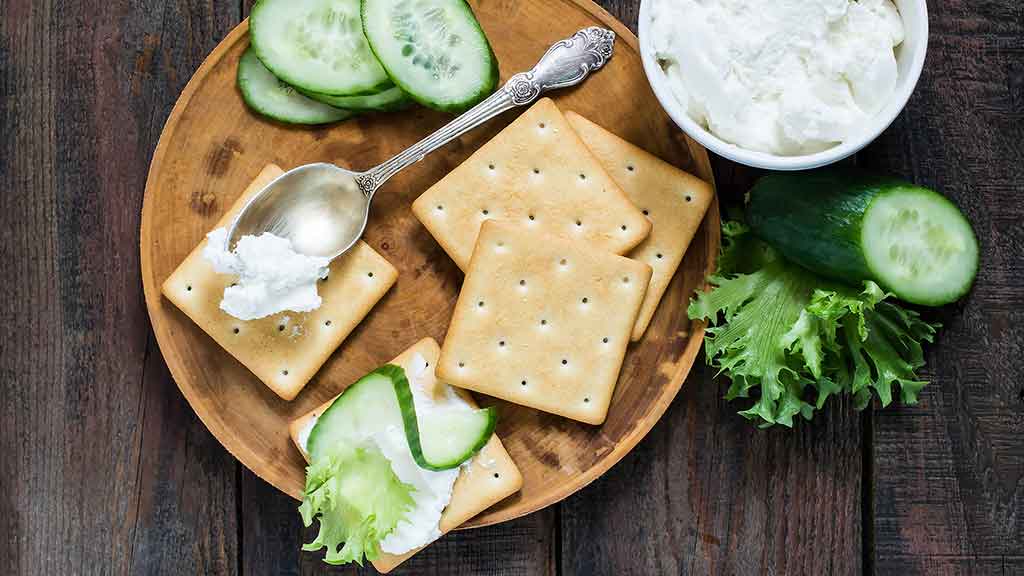
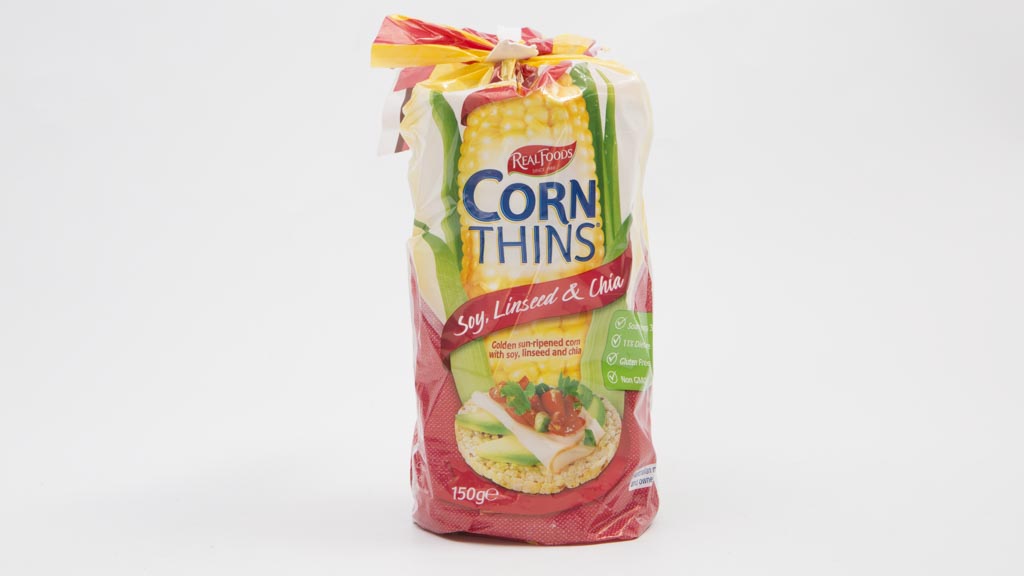
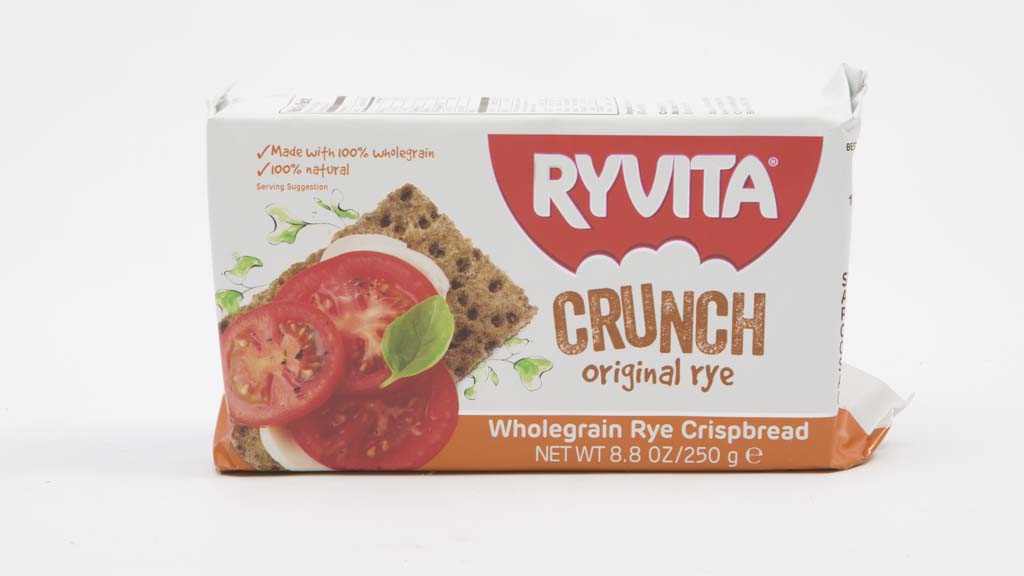
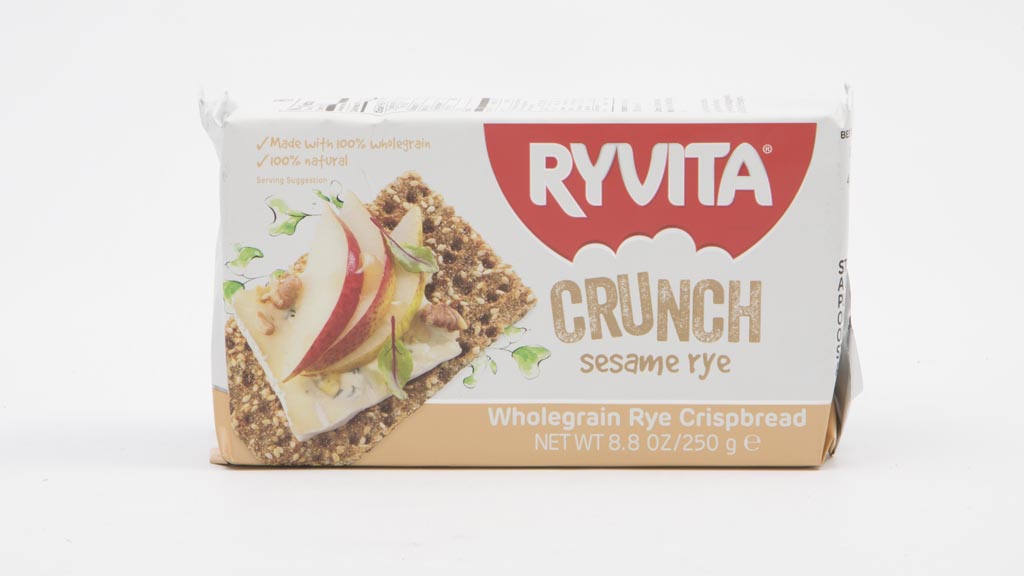
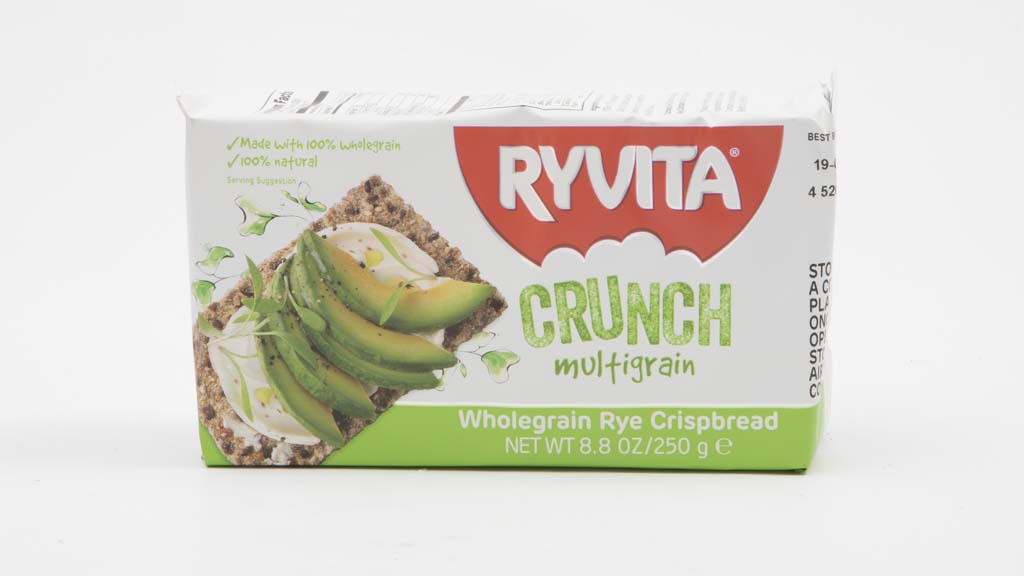
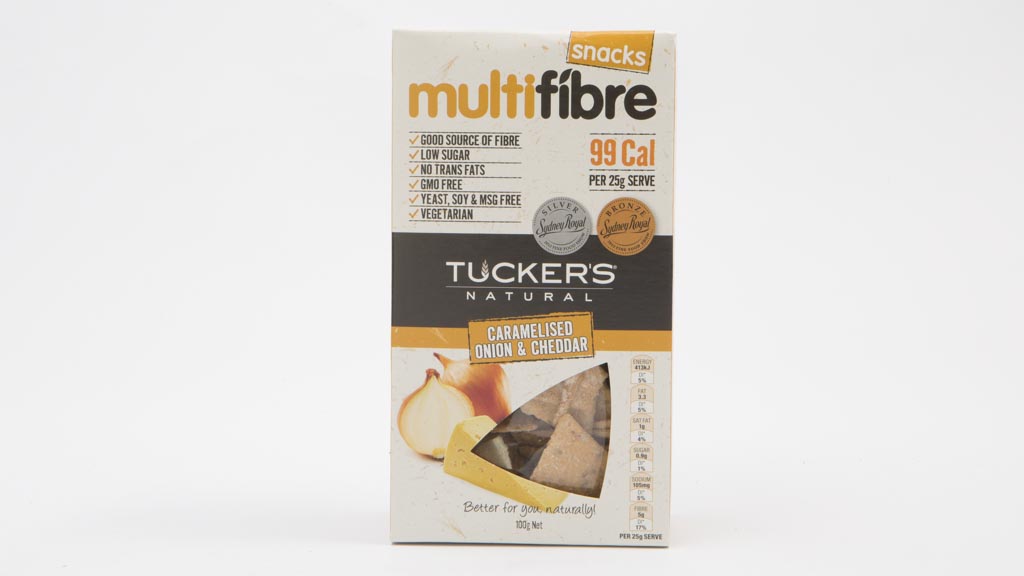
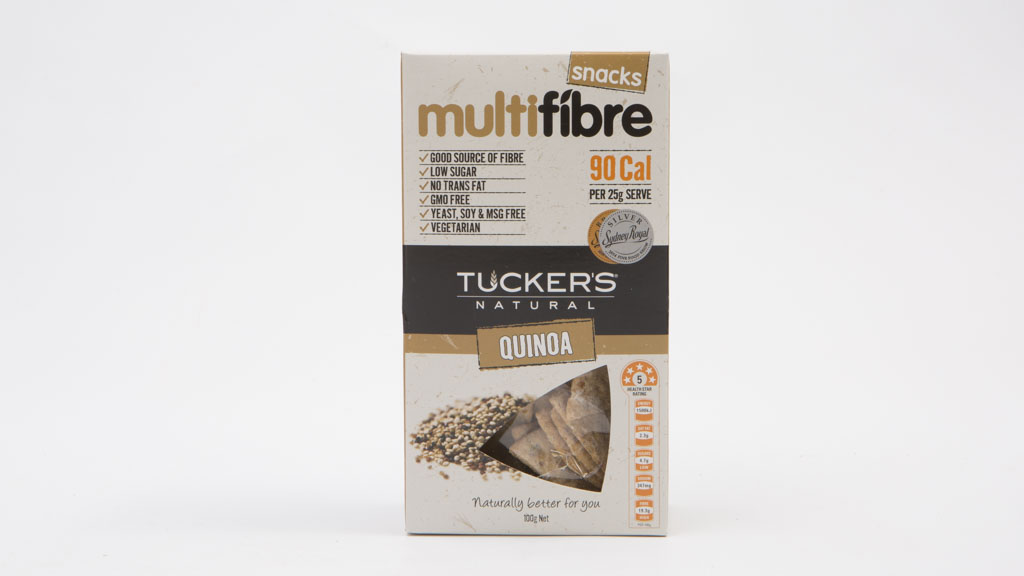
Australians are crackers for crackers. Perhaps it’s their versatility: you can have them with dip, with cheese, topped with salmon or cucumber or just on their own. There’s also the convenience – it’s easy to throw a pack in the picnic basket, the car, your handbag or desk drawer, where they’ll keep perfectly well until you’re ready to eat them. They can also make a great snack for the kids at the park or in their lunchbox.
There are literally hundreds of different cracker products on offer. So how does your favourite cracker stack up? And which should you choose?
Are crackers healthy?
You may think that crackers are a healthier option than a packet of chips. But when we calculated the Health Star Rating (HSR) for 328 savoury biscuit products, we found they vary hugely when it comes to nutrition, from those worthy of a five-star rating to those that should be considered as occasional treats only – and that’s before you load them up with brie or dip them in the guacamole.
About 40% of the products in our review received a health star rating of just two stars or less – and they tend to be higher in saturated fat and sodium, and lower in fibre. Seven received the maximum rating of five stars.
See our health star rating feature for details on how health stars are calculated.
How to choose healthier crackers
Comparing health star ratings is an easy way to make healthier food choices, and it’s particularly helpful when choosing foods like savoury biscuits where products vary so much in how healthy they are – even within subcategories like rice crackers or crispbreads. But only a small proportion of the products in our review displayed health star ratings on their pack.
Until more food companies start using them, check for wholegrains in the ingredients list and compare crackers using the nutrition information panel on the pack – be sure to use the 100g figures, as serving sizes differ between products.
Don’t have time to compare nutrition information panels or ingredients lists but want the best chance of choosing a healthy option? We calculated the average health star rating for each of the cracker categories reviewed and found that corn cakes, wholegrain crispbreads and wholegrain rice crackers come out on top. So hit those sections of the cracker aisle first.
Highest rating crackers
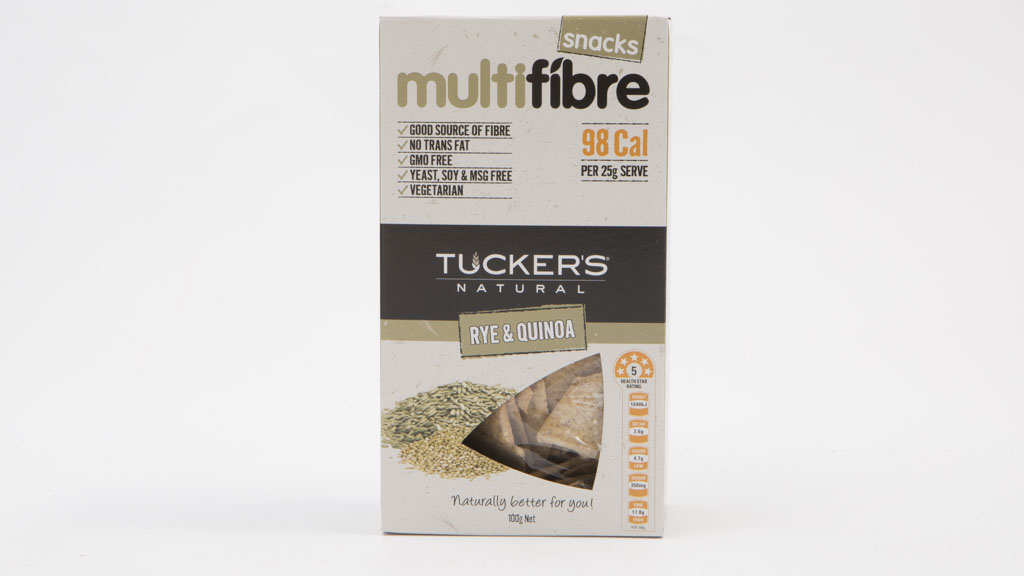
The following products all have a health star rating of five. Nutrition information is per 100g.
One thing that most of the higher-rating crackers have in common is that they’re made from wholegrains. Take the popular category of rice crackers, for example; the highest rating products (all with an HSR of four) are:
Peckish Brown Rice Crackers No Salt
Sakata Wholegrain Sour Cream & Chives
Sakata Wholegrain Cheddar & Chives
Sakata Wholegrain Original
Woolworths Select Brown Rice Crackers Multigrain
So in the absence of a health star rating on the pack to help you choose, one simple thing to look for is a cracker described as ‘wholegrain’, ‘multigrain’, ‘rye’ or ‘brown’, and check for wholegrains or wholemeal in the ingredients list. Among other benefits, wholegrain products tend to be higher in fibre, which will boost their rating. However, you’ll still need to keep an eye out for sodium.
Crackers high in salt
We consider products containing 600mg sodium or more per 100g to be high in salt, and about 60% of the products in our test fall into this category – although that’s hardly surprising given we’re talking about savoury snacks.
But what we did find staggering was that in just 100g, a handful of products in our test had 1600mg (or more) sodium – the amount it’s suggested adults should limit themselves to over a whole day in order to prevent chronic disease. And children need far less than this.
Granted, the serving size suggested on the pack for crackers tends to sit around the 25g mark. A serve of salt-laden Arnott’s Shapes Chicken Drumsticks or Fantastic Bursts Sea Salt & Balsamic Vinegar has about 400mg of sodium, for example – still a quarter of that daily target. But as we all know, crackers can be more-ish and it can be hard to stop eating once the pack has been opened.
On average the least salty crackers are corn and rice cakes and wholegrain rice crackers.
Are baked crackers better for you?
‘Baked not fried’ claims frequently appear on product packs, and they certainly sound reassuring – after all we know that ‘fried’ means ‘fat’. But don’t be tricked into thinking baked products are a healthier choice. ‘Oven baked’ Damora Topz crackers from Aldi and ‘baked not fried’ Woolworths Select Blasts (chicken and pizza), for example, are all about 25% fat and high in saturated fat too – not exactly food you should be eating on a regular basis.
If you’re watching how much saturated fat you eat, opt for corn or rice cakes, wholegrain crispbread or wholegrain rice crackers, the categories lowest in saturated fat on average.
How we got our results
We collated the nutrition and ingredient information for all the cracker products we could find in supermarkets and large grocers – about 400 products in total, including different flavours.
For comparison purposes we put products into categories, based on the categories used by Retail World and Arnott’s (which counts for around one fifth of the products we looked at).
The categories were:
breadsticks
corn cakes
crispbread – regular
crispbread – wholegrain/wholemeal/multigrain/rye
flavoured crackers
general crackers
lavosh/flatbread
rice cakes
rice crackers – brown/multigrain/wholegrain
rice crackers – regular
toasts
wafer/water crackers
We then calculated the health star rating for each product using the calculator provided by the Department of Health. HSRs are based on 100g of the product and range from half a star to five stars – the more stars the better.
It’s not mandatory to label total dietary fibre, so where fibre data was missing we used the average fibre value for that category to calculate the HSR, and we’ve footnoted this in the table.
Where insufficient nutrition and ingredient information was available we excluded the product from our review. In total we were able to compare 328 different products.
Cracker comparison
Breadsticks
Product
HSR
Energy (kJ)
Sat. fat (g)
Sugars (g)
Sodium (mg)
Fibre (g)
Always Fresh Grissini Rosemary & Sea Salt
1.5
1790
2.5
5
1120
(A)
Always Fresh Grissini Sesame & Sea Salt
2
1810
3.7
4.9
840
(A)
Always Fresh Grissini Three Seed & Sea Salt
1.5
1880
3.8
0.8
1260
(A)
Ciao Italia Grissini Sesame
2
1865
2.3
2
800
2.8
Moredough Kitchens Olive Oil Grissini
2
1753
1.2
0.3
757
(A)
Moredough Kitchens Parmesan Grissini
2
1705
2.77
0.3
802
(A)
Moredough Kitchens Rosemary Grissini
2
1723
2.8
0.3
757
(A)
Val Verde Salt Grissini
1.5
1724
1.3
2.8
1200
(A)
Val Verde Sesame Grissini
2
1843
2.3
2
800
(A)
Val Verde Traditional Grissini
4
1689
1
1.5
90
(A)
TABLE NOTES: HSR Health Star Ratings. (A) Fibre value not provided in NIP. The average fibre value for that category has been used to calculate HSR.
TABLE NOTES: HSR Health Star Ratings. (A) Fibre value not provided in NIP. The average fibre value for that category has been used to calculate HSR. (B) Fibre value not given in nutrition information panel but Health Star Rating displayed on pack.
TABLE NOTES: HSR Health Star Ratings. (A) Fibre value not provided in NIP. The average fibre value for that category has been used to calculate HSR. (B) Fibre value not given in nutrition information panel but Health Star Rating displayed on pack.
Lavosh/flatbread
Product
HSR
Energy (kJ)
Sat. fat (g)
Sugars (g)
Sodium (mg)
Fibre (g)
Always Fresh Crispini Cracked Pepper & Sea Salt
3
1670
4.1
4.6
867
(A)
Always Fresh Crispini Sea Salt
3.5
1690
4
5.2
592
(A)
Barb Buggy’s Barossa Kitchen Barossa Bark Nigella
3.5
1700
7.9
6.2
164
(A)
Barb Buggy’s Barossa Kitchen Barossa Bark Salt & Pepper
TABLE NOTES: HSR Health Star Ratings. (A) Fibre value not provided in NIP. The average fibre value for that category has been used to calculate HSR. (B) Fibre value not given in nutrition information panel but Health Star Rating displayed on pack.
Rachel Clemons is an award-winning journalist who worked at CHOICE from 2004–2022.
During her time at CHOICE her core focus was on food and nutrition, from reviewing breakfast cereals and fast food to dispelling myths about the benefits of detox kits and gourmet salt or translating confusing food labels – with the occasional taste test thrown in for good measure.
Prior to CHOICE she lived overseas, working predominantly in hospitality when she wasn't travelling and eating her way through various cuisines. She holds a Master of Science in Nutrition from King's College London (where she also researched and wrote for CHOICE's UK sister organisation, Which?), and a Bachelor of Science, Health Sciences from the University of Adelaide.
In 2017 she won the Dietitians Association of Australia's Nutrition Journalism Award and she's currently on the Steering Committee as a Parent Member of Parents' Voice.
You can find her on Twitter and LinkedIn.
Rachel Clemons is an award-winning journalist who worked at CHOICE from 2004–2022.
During her time at CHOICE her core focus was on food and nutrition, from reviewing breakfast cereals and fast food to dispelling myths about the benefits of detox kits and gourmet salt or translating confusing food labels – with the occasional taste test thrown in for good measure.
Prior to CHOICE she lived overseas, working predominantly in hospitality when she wasn't travelling and eating her way through various cuisines. She holds a Master of Science in Nutrition from King's College London (where she also researched and wrote for CHOICE's UK sister organisation, Which?), and a Bachelor of Science, Health Sciences from the University of Adelaide.
In 2017 she won the Dietitians Association of Australia's Nutrition Journalism Award and she's currently on the Steering Committee as a Parent Member of Parents' Voice.
You can find her on Twitter and LinkedIn.
For more than 60 years, we've been making a difference for Australian consumers. In that time, we've never taken ads or sponsorship.
Instead we're funded by members who value expert reviews and independent product testing.
With no self-interest behind our advice, you don't just buy smarter, you get the answers that you need.
You know without hesitation what's safe for you and your family. And our recent sunscreens test showed just how important it is to keep business claims in check.
So you'll never be alone when something goes wrong or a business treats you unfairly.