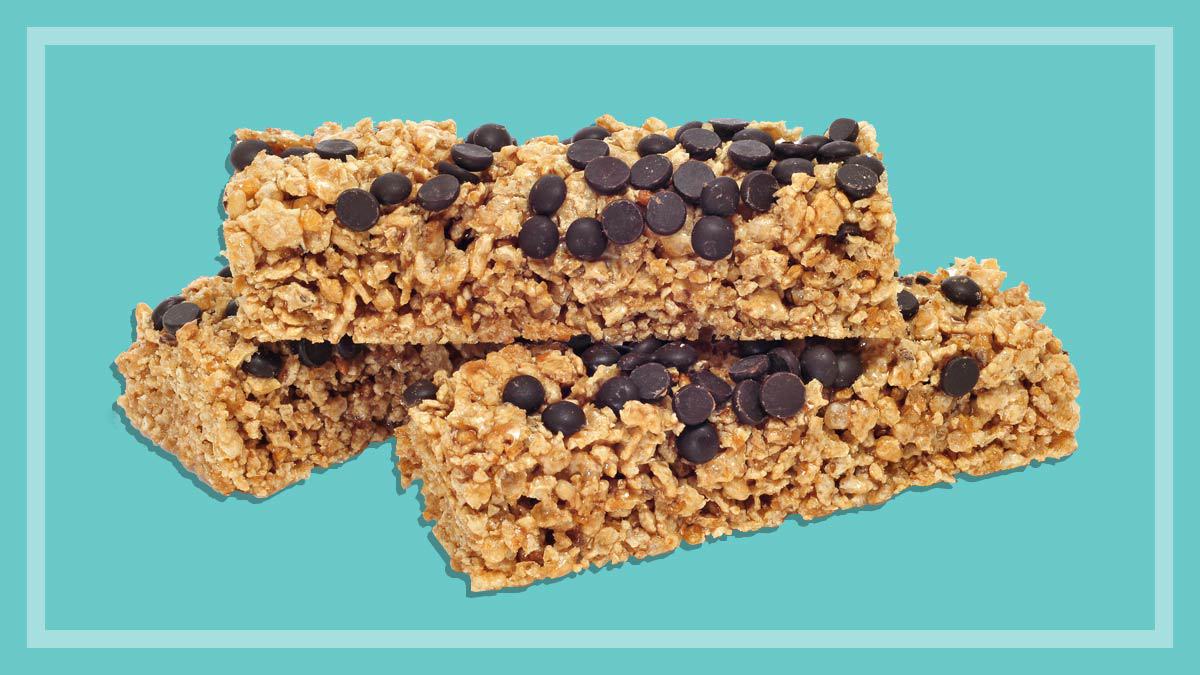
Cereal and muesli bars are a convenient snack to add to the school lunchbox, and tend to have a healthy image. But many are so loaded with saturated fat and sugar, they have more in common with the lollies and cakes most kids would rather eat.
They’re always going to be sweet, because the manufacturers use various kinds of sugars – but usually ordinary sugar (sucrose), glucose or glucose syrup – to make them stick together. But are any cereal or muesli bar products worthy of a place in your child’s lunchbox?
Lunchbox hits
Most schools have a nut-free policy, which means a lot of snack bars you can buy aren’t suitable to pack in your child’s lunchbox. In 2016 we sifted through more than 200 products and found 95 snack bars that don’t include nuts in their ingredients list – see the table. We then compared these lunchbox-friendly options to find the healthiest.
The following 14 nut-free products received a health star rating of 4 or more, and met our criteria for energy and wholegrains per serve:
Goodness Superfoods Better for U Cereal Bars Wild Berries & Yoghurt
Freedom Foods Apples and Cinnamon Crunchola Chewy
Freedom Foods Apricot, Coconut and Chia Crunchola Chewy
Freedom Foods Choc Chip Crunchola Chewy
Uncle Tobys Chewy Apricot
Uncle Tobys Chewy Choc Chip
Uncle Tobys Chewy Forest Fruits
Uncle Tobys Chewy White Choc Chip & Raspberry
Uncle Tobys Chewy White Choc Chip
Uncle Tobys Chewy Yoghurt Apricot
Uncle Tobys Chewy Yoghurt Honeycomb
Uncle Tobys Chewy Yoghurt Raspberry
Uncle Tobys Chewy Yoghurt Strawberry
Uncle Tobys Chewy Yoghurt Mango Passionfruit
Bear in mind that many of these products are still relatively high in sugars – both added, and from dried fruit that can stick to teeth – and can contribute to tooth decay. Fresh fruit together with a serve of wholegrain crackers such as corn thins would make a healthier lunchbox snack.
Kellogg’s may promote their LCM bars as “a sure-fire lunchbox hit”, but they’re a miss when it comes to nutrition. Kellogg’s LCMs Split Stix Yoghurty, for example, have a health star rating of just 0.5. And while they’re only small (23g a bar), they’re high in saturated fat, pack a sugar punch and are among the saltiest products reviewed. Kellogg’s Nutri-Grain Bars (1 star) aren’t much better.
Fontelle Oven Baked Mini Meal Choc Chip (1 star) is true to its name; a 120g bar provides 2412kJ – as much as a meal, and more than a quarter of the recommended daily energy intake for an adult. Not to mention the 8.5 teaspoons of sugar it crams in too.
Coconut and butter feature high up in the ingredients list of Carman’s Oat Slice Belgian Chocolate Brownie, Carman’s Oat Slice Cranberry & Blueberry and Carman’s Oat Slice Golden Oat and Coconut (all 1 star) which may make them tasty but also bring saturated fat to the party. Carman’s Oat Slice Golden Oat and Coconut tops the chart, with 19.7% saturated fat. The oat slices in our review were higher in saturated fat and contained more kilojoules per serve on average than other bars, so it’s a category best avoided if you’re after a healthy choice.
Gluten-free options
While they don’t meet our wholegrains criteria, the following gluten-free bars also receive 4 or more stars and meet our energy criteria, so are worth considering for schoolkids who need gluten-free options:
Freedom Foods Crafted Blends with Superfoods Pepitas, Spinach & Chickpeas
Soma Bite Apple and Superseed
Food For Health Cranberry, Apple & Amaranth Bars
Freedom Foods Ancient Grains Muesli Bar Cranberries, Apple & Grains
Eating sugary snacks can be harmful to teeth. The bacteria in our mouths use these sugars to make acid, and if teeth are exposed to this acid long enough it can cause decay. Snack bars, especially the stickier ones, are bad news because the sugar sticks to your teeth. The Australian Dental Association suggests we help stop decay by limiting our intake of these types of snack foods.
How we assessed
We bought all the snack bars we could find in one large Coles, Woolworths and Aldi supermarket in Sydney in March and April 2016, separated those with no nuts on their ingredient list, and evaluated the ingredients and nutrition information on the labels. When choosing bars to recommend, we took into account the following criteria:
Health star rating (HSR). The HSR is based on an algorithm which takes into consideration kilojoules and ‘negative’ nutrients (sugars, saturated fat and sodium) associated with increasing the risk factors for chronic diseases like type 2 diabetes, heart disease and obesity, and balances them against the ‘positive’ aspects of a food – its fruit, vegetable, nuts or legumes content (all valuable sources of a range of vitamins, minerals and antioxidants), as well as protein and dietary fibre content. The data used is per 100g of food. The higher the HSR, the healthier the product.
Energy per serve. A healthy snack should fill a hole without giving you too many extra fattening kilojoules. Nutritionists recommend that we limit our energy intake from snacks to 600kJ.
Wholegrains per serve. Australian Dietary Guidelines recommend we choose wholegrain foods most of the time because they contain a range of protective components, such as phytonutrients, which are thought to play an important role in the prevention of disease. The Grains & Legumes Nutrition Council says foods must contain a minimum of 8g of wholegrain per serve in order to make a claim about its wholegrain content. (This criteria wasn’t used in the assessment of nut bars, raw bars and seed bars.)
Lunchbox-friendly snack bars compared
We compared 95 lunchbox-friendly snack bars in 2016.
We’ve listed them below in order of health star rating (highest to lowest).
Product name
Health star
rating
Price
per bar ($)*
Bar size
(g)
Energy per serve (kJ)
Wholegrains
per serve (g)
Protein
(g/100g)
Sat Fat (g/100g)
Sugars (g/100g)
Fibre (g/100g)
Sodium
(mg/100g)
Gluten -free claim
247 White Chocolate and Raspberry Truffle
3
np
40
567
na
25.6
7.3
5.1
12.4
219
no
All Natural Bakery Banana Oat Slice
2
2.69
100
1770
30.0
7.04
11.4
20.12
7.7
179
no
All Natural Bakery Yoghurt Peach and Mango Oat Slice
1.5
2.69
100
1819
30.0
7.66
13.54
23.11
7.1
177
no
Aribar Wholegrain Rice Crispy Bars Vanilla Blast
2.5
1.26
22
380
8.1
3.1
3.5
22
5.1
96
yes
Aribar Wholegrain, Fruit & Veggie Bars Apple, Raisin & Oats
4
1.30
22
360
7.7
6.4
1.7
32.2
7.8
19
no
Aribar Wholegrain, Fruit & Veggie Bars Raspberry, Apple & Oats
4
1.30
22
359
7.7
6.4
1.7
31.7
7.8
19
no
Carman’s Oat Slice Belgian Chocolate Brownie
1
0.93
35
680
10.5
7.9
16.5
29.4
6.0
155
no
Carman’s Oat Slice Cranberry & Blueberry
1
0.90
35
678
10.2
6.3
19
26
6.2
175
no
Carman’s Oat Slice Golden Oat and Coconut
1
0.93
35
684
10.5
6
19.7
23.6
6.5
175
no
Coles Yoghurt Topped Bars Apricot
2.5
0.35
31
561
na
6.1
5.6
26.2
4.8
66
no
Coles Yoghurt Topped Bars Strawberry
2
0.35
31
555
na
5.8
7.3
25.2
4.8
90
no
Fontelle Oven Baked Mini Meal Choc Chip
1
1.79
120
2412
na
7.2
18.8
28.7
6.2
156
no
Food For Health Cranberry Apple & Amaranth Bars
4
1.17
35
507
na
6.5
1.6
15.6
4.3
12.5
yes
Freedom Foods Ancient Grains Muesli Bar Cranberries, Apple & Grains
4
0.42
29
471
na
5
2.4
21.6
8.9
40
yes
Freedom Foods Apples and Cinnamon Crunchola Chewy
4
0.83
35
530
15.8
5.7
1.9
15.7
9.4
30
no
Freedom Foods Apricot, Coconut and Chia Crunchola Chewy
Rachel Clemons is an award-winning journalist who worked at CHOICE from 2004–2022.
During her time at CHOICE her core focus was on food and nutrition, from reviewing breakfast cereals and fast food to dispelling myths about the benefits of detox kits and gourmet salt or translating confusing food labels – with the occasional taste test thrown in for good measure.
Prior to CHOICE she lived overseas, working predominantly in hospitality when she wasn't travelling and eating her way through various cuisines. She holds a Master of Science in Nutrition from King's College London (where she also researched and wrote for CHOICE's UK sister organisation, Which?), and a Bachelor of Science, Health Sciences from the University of Adelaide.
In 2017 she won the Dietitians Association of Australia's Nutrition Journalism Award and she's currently on the Steering Committee as a Parent Member of Parents' Voice.
You can find her on Twitter and LinkedIn.
Rachel Clemons is an award-winning journalist who worked at CHOICE from 2004–2022.
During her time at CHOICE her core focus was on food and nutrition, from reviewing breakfast cereals and fast food to dispelling myths about the benefits of detox kits and gourmet salt or translating confusing food labels – with the occasional taste test thrown in for good measure.
Prior to CHOICE she lived overseas, working predominantly in hospitality when she wasn't travelling and eating her way through various cuisines. She holds a Master of Science in Nutrition from King's College London (where she also researched and wrote for CHOICE's UK sister organisation, Which?), and a Bachelor of Science, Health Sciences from the University of Adelaide.
In 2017 she won the Dietitians Association of Australia's Nutrition Journalism Award and she's currently on the Steering Committee as a Parent Member of Parents' Voice.
You can find her on Twitter and LinkedIn.
For more than 60 years, we've been making a difference for Australian consumers. In that time, we've never taken ads or sponsorship.
Instead we're funded by members who value expert reviews and independent product testing.
With no self-interest behind our advice, you don't just buy smarter, you get the answers that you need.
You know without hesitation what's safe for you and your family. And our recent sunscreens test showed just how important it is to keep business claims in check.
So you'll never be alone when something goes wrong or a business treats you unfairly.