If you want to generate electricity on your roof but don’t like
the look of solar panels or your roof isn’t suitable, then solar roof tiles, also called building
integrated photovoltaics (BIPV), might be the answer. BIPVs are
actually part of the roofing material, discreetly integrated with
similar-looking non-solar tiles.
We take a look at four innovative products on (or nearly on) the market for homeowners and see what you’ll get for your investment.
Why consider solar roof tiles?
You value the aesthetic of clean roof lines.
You live in a heritage conservation area that
prevents the installation of solar panels.
Your north-facing roof area faces the street.
Your sunny roof area is the wrong shape or size for conventional PV
panels.
The advantages of solar roof tiles
Just like conventional solar PV panels, solar roof tiles can generate electricity to heat the water, run the appliances and cool the house.
But they have other advantages:
There’s no need to drill holes in the roof to install them.
They’re not bolted onto the roof, so there’s no extra
strain from natural wind flow.
They’re much more resistant to cyclonic winds than
solar panels, and in our strength and impact testing for hail damage, they often perform as well or
better than conventional roofing materials.
How much do solar roof tiles cost?
Solar roof tiles cost more than the regular PV set-up. To create a level playing field, we picked a 4kW system as a comparison point for price with the tile retailers below.
The average cost for a fully installed 4kW solar PV system in
Australia is $5697, according to data from solar PV brokers Solar Choice, which includes the cost of the inverter (see jargon buster).
Although tiles are pricier than solar panels, it’s likely they’ll remain attractive to high-end, architect-designed houses with slate- or ceramic-tiled roofs. But, as with all technologies, once their scale of production increases the cost should fall.
Bristile solar roof tiles
Cost: $15,675 (4kW of Bristile solar tiles with inverter)
Solar efficiency:
16%
Space:
4kW of solar takes up 28.5m2
Warranty: 25 years at 80% of their
full power-generation capabilities. There’s a 10-year product
warranty that guarantees their structural integrity and a 10-year total roof warranty for the system.
Australian company Bristile Roofing is due to complete its first solar roof
project before the end of 2017. The Bristile Solar tiles are integrated
with Bristile flat tiles in either a ceramic/terracotta or concrete range.
According to the manufacturer, the solar efficiency of the tiles is on par
with traditional solar panels and the monocrystalline cells in the tiles
are made by Suntech, a well-known solar PV manufacturer.
A 4kW system will take up approximately 28.5m2 on the roof. The
cost per square metre of solar tiles is$550/m2 which includes the Fronius inverter.
The rest of the roof will be made up of non-solar tiles which, according to
Bristile Roofing, cost the same as a standard tile roof at approximately
$65/m2.
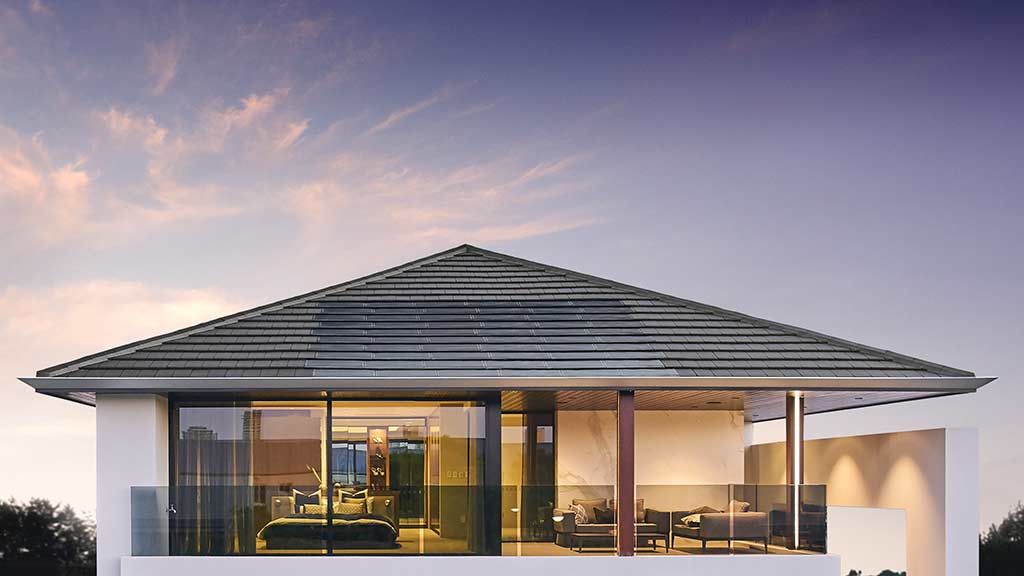
The Bristile Solar Roof Tile (see also the title image)
Tractile’s Eclipse solar PV tiles
Cost:
$13,000 (4kW of Eclipse Solar PV tiles with hot water channels, the
inverter and the battens)
Solar efficiency:
20%
Space:
4kW of solar takes up 24m2
Warranty: Standard solar performance
warranty of 80% capacity after 25 years, as well as a 30-year product
warranty.
Australian company Tractile has developed a patented, interlocking roofing tile. Within the Tractile range is the Eclipse solar PV tile that’s in the process of being released to market.
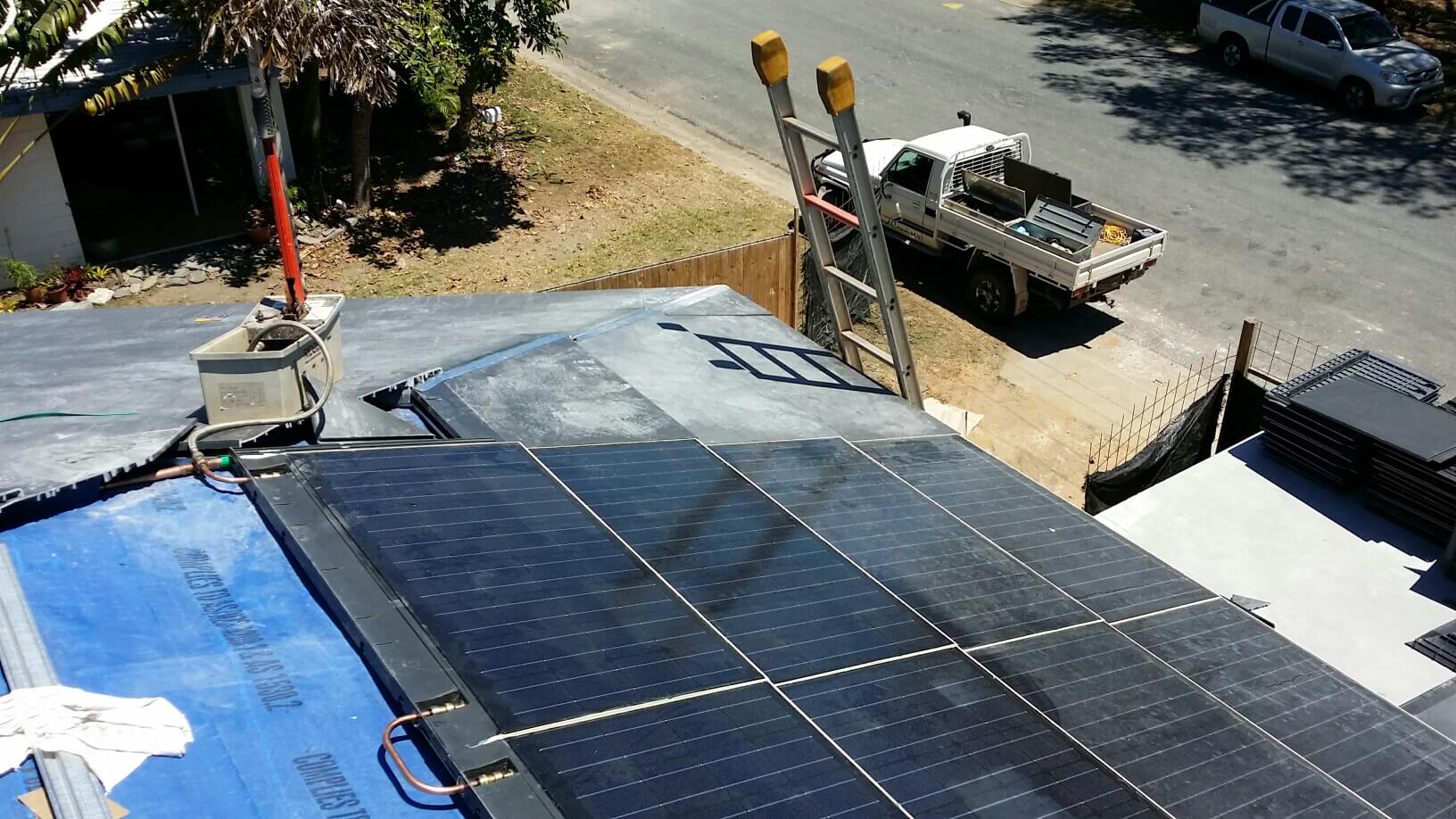
The Tractile roof tiles are approximately six times the size of traditional
tiles (1100mm wide and 650mm high). Tractile’s Eclipse solar PV tiles not
only generate electricity but also pre-heat water to 30 or 35°C through water channels embedded in the back of the
tile.
According to the manufacturer, the Solar Eclipse tile has a high efficiency
rating of 20% (energy output) because the solar cells in the tile are
cooled by water being channelled behind it, delivering better performance
in hot conditions.
The complete installed cost for 4kW of Tractile Eclispe solar PV tiles on
a 300m2 roof with compatible Tractile tiles in SE Queensland (including the solar-warmed water and heat exchange tank and inverter) is
$55,000 after rebates, according to the company.
Installation prices might
increase depending upon location, site and roof design.
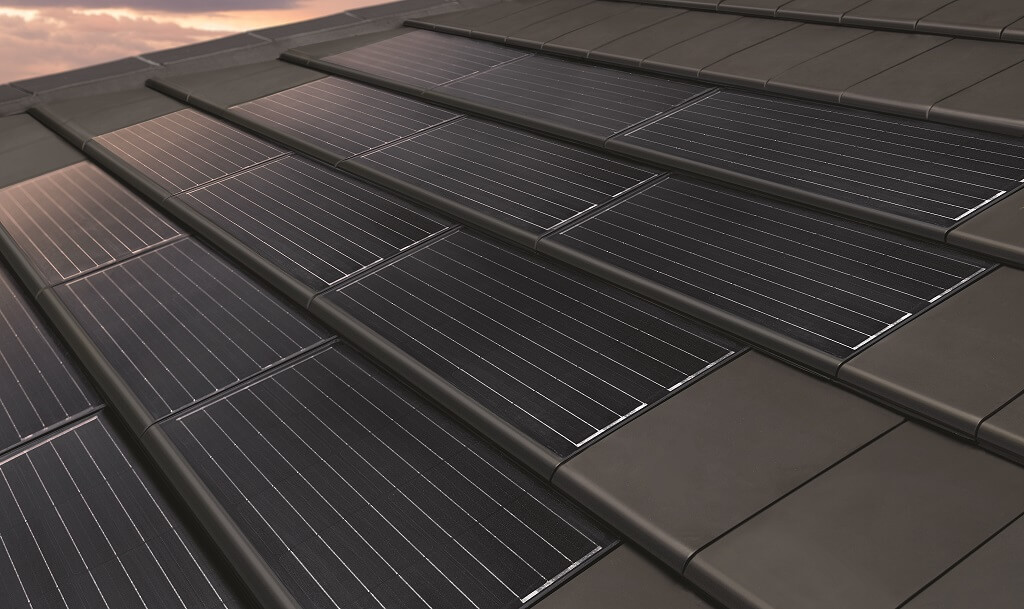
Tractile’s Eclipse Solar PV tiles with the hot water channels.
Nulok solar inserts
Cost: Approximately $8000–$14,000 (4kW solar component, including GST, fitted but not
including the inverter or electrical installation)
Solar efficiency:
18.6–22.3%
Space:
4kW of solar takes up 28.8m2
Warranty: 12 years at 90% power
output and 25 years at 80% power output.
Another Australian innovation, the patented Nulok roofing system includes
the Nulok Solar insert, along with slate and ceramic tiles in its range.
This high-efficiency and discrete solar-integrated roofing system has won
design awards in Australia and overseas and is marketed towards architects
and new builds. Nulok solar inserts are installed on approximately 25
Australian roofs per year.
A spokesperson for Nulok told us a 300m2 ceramic tiled roof with
4kW worth of Nulok solar tiles, fully installed with inverter would cost
approximately $72,000, depending upon the features of the roof. The same-sizedslate roof would cost approximately $86,000.
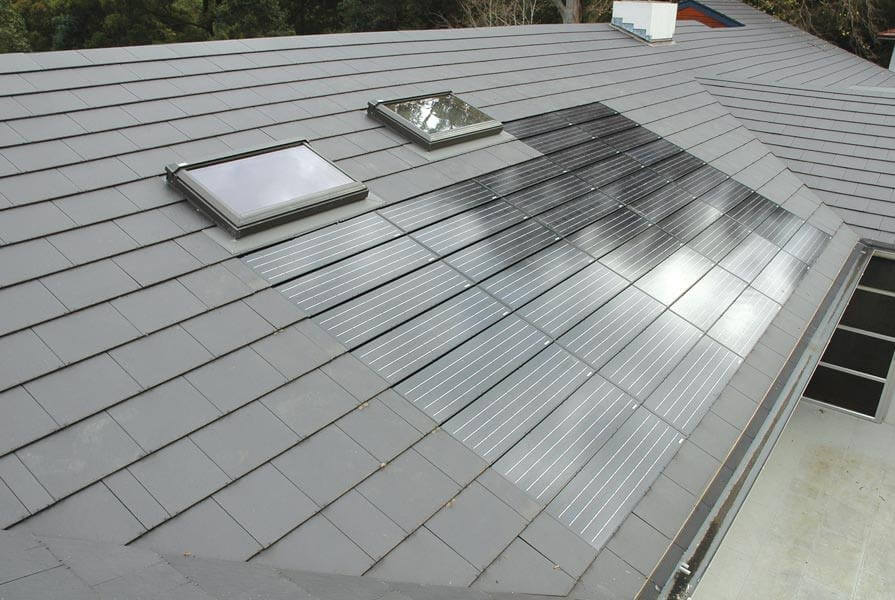
Nulok solar inserts
Solartiles by Monier
Cost: Approximately $18,000 (4kW unit in NSW, installed including inverter)
Solar efficiency:
17.3%
Space:
4kW of solar takes up 30m2
Warranty: 25 years at more than 80%
rated power. The warranty on the life of the solar tile is 10 years.
Monier, which has been putting roofs on Australian homes for 100 years, launched its Solartile made with monocrystalline cells five years ago.
Monier says these solar tiles were the first BIPV roofing
product in Australia.
Like other BIPV tiles, Solartiles are a custom product that fit only with
the Monier range of flat-profiled concrete roof tiles. They can be
added to or retrofitted at any stage.
A spokesperson told us it’s easy to expand the system, but they advise
buying a unit that’s battery-ready for when you do want to
invest in energy storage.
The company manages the supply and installation of the system, as well as the
government rebates on the customer’s behalf.
Tesla solar tiles
In May 2017, US car and solar panel manufacturer Tesla announced it was taking deposits of $1310 in Australia for its range of solar roof tiles with smooth or textured glass versions, and slate and Tuscan styles.
However, despite the earlier hype, the company now says the tiles won’t be available for some time yet, and is short on details about the tiles’ specs and the costs, leaving prospective Australian buyers in the dark about what they’ll actually get for their money.
The solar efficiency of solar PV is the proportion of sunlight energy hitting the tile or panel that’s converted into electricity (the higher the better) and usually sits in a range of 15–20%.
The solar PV inverter is a device that converts the variable direct current (DC) output of a solar PV panel or tile into a usable alternating current (AC) that can be used in the home or sent to the electrical grid. The inverter is usually about 20% of the solar system’s cost but varies with quality.
For more than 60 years, we've been making a difference for Australian consumers. In that time, we've never taken ads or sponsorship.
Instead we're funded by members who value expert reviews and independent product testing.
With no self-interest behind our advice, you don't just buy smarter, you get the answers that you need.
You know without hesitation what's safe for you and your family. And our recent sunscreens test showed just how important it is to keep business claims in check.
So you'll never be alone when something goes wrong or a business treats you unfairly.