Home energy-efficiency ratings
Can a house's energy efficiency be measured accurately?
Last updated: 27 Feb 2018
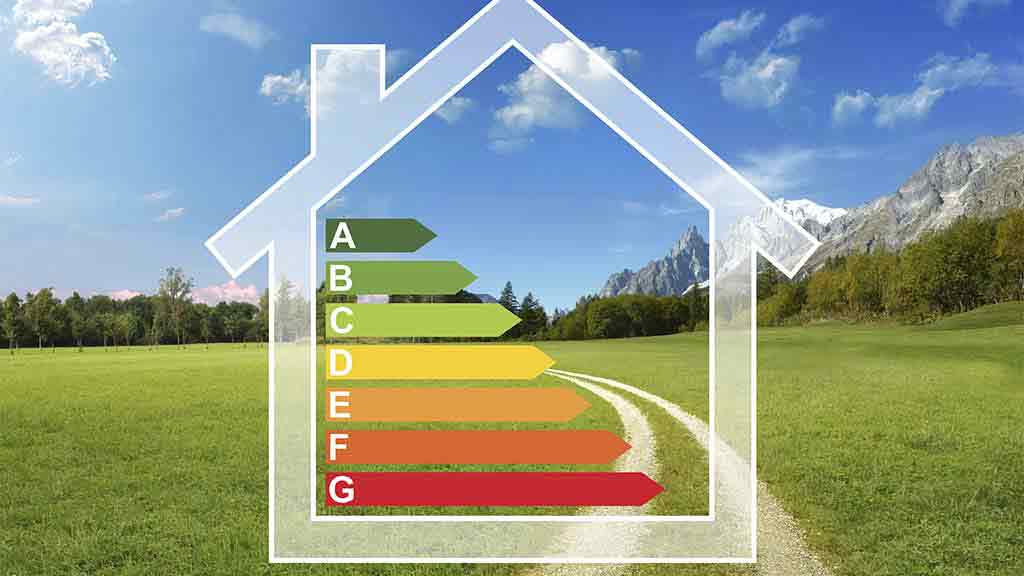
Your house’s energy efficiency rating could be far lower than it should be, thanks to bad installation by builders. We explain home energy rating schemes and offer tips to reduce your power bills and make your house more eco friendly.
On this page:
The importance of having an energy-efficient home
The energy efficiency of Australian houses has profound implications on three key areas:
1. Household costs
2. Australia’s carbon emissions and meeting our international reduction
targets
3. The load on the national electricity market
In addition to these, a government study into ACT house prices found that
an energy rating improvement of one star would increase market value by
three percent on average, which can amount to tens of thousands of dollars.
Homes are a significant contributor to greenhouse gas emissions, accounting
for about 11% of Australia’s total carbon emissions. Energy efficiency has
been identified as one of the cheapest ways for Australia to cut carbon
emissions.
All new homes or renovations in Australia must meet a
minimum six-star or equivalent energy rating, depending on your state or
territory.
Unfortunately, Australian standards fall far short of those in Europe and
North America and progress is slow. The overall energy intensity of
residential buildings in Australia improved by only five percent between 2005 and 2015.
The Australian Building Codes Board is currently reviewing the National
Construction Code to improve the energy efficiency of buildings and
compliance (with changes to come into effect in 2019).
The problem with house energy-efficiency ratings
Building designers use special software to ensure that the building plan is
consistent with efficiency measures. There are also other rating methods,
such as meeting the deemed-to-satisfy (DTS) provisions of the construction
code.
The problem is that apart from the initial design stage, there’s typically
no further assessment to ensure recommended energy-saving requirements are
actually installed, or installed properly. This has resulted in cases where
there have been clear discrepancies between the energy rating listed on
paper and the actual energy efficiency for some new homes being built.
So ultimately, because an energy-efficient home potentially costs more,
consumers may be paying a premium for something they aren’t getting, and
anticipating energy savings that aren’t occurring.
In some cases, owners have been shocked when independent assessors rated
their homes as far less energy efficient than they were originally told.
This could be the result of an incorrect evaluation or an issue with the
building and construction of the dwelling.
CHOICE’s investigation into house energy ratings in 2011
found that Australia needs to improve its building energy ratings system in
order for it to continue to add value to homes and improve energy
efficiency.
Plans vs buildings: the energy discrepancy
Dominic Ogburn is a building consultant and training specialist with more
than 25 years’ experience in the building industry. He’s also a NSW Fair
Trading Award-winner for advancing consumer protection in the industry. In
his opinion, the current regulation of building energy ratings for new
homes is “pathetically inadequate”.
“Basically, the building industry is left to self-regulate when it comes to
installing energy-savings measures,” he said. “It’s a conflict of interest
for some developers who want to employ cost-cutting measures when
completing a build.”
But the buck doesn’t always stop with builders. “Energy assessors typically
work off the design, so you need to check whether they have the
qualifications to perform post-build inspections properly,” says Ogburn.
Ogburn provided CHOICE with evidence of homes that didn’t comply with the
plans provided through energy ratings software. One building was missing
compliance elements such as a rainwater tank, ceiling fans, properly
installed draught seals, ventilation windows in the laundry and ceiling
insulation.
“At the end of the day, consumers are paying a premium for a product that
is not delivered as specified,” says Ogburn.
Air leaks reduce energy efficiency
A lot of homes leak air, which has a big impact on their energy efficiency. Jan Brandjes tests airflow issues to see if builders have met the
gap-sealing requirements.
“I’ve tested hundreds of homes and found them to be consistently leaky. In
many cases, exhaust fans in the bathroom and unsealed downlights are
causing a lot of air leakage,” says Brandjes.
Fortunately, many of the problems can be fixed easily and for much less
than adding other energy-saving measures, such as solar. For a new home
under construction, this cost can be as little as $300, or $1000-1500 for
existing homes.
Bad installation
Even if you have the highest-performing thermal windows, bad installation
can mean you’ll lose a lot of energy efficiency.
Dick Clarke, a building designer with 35 years’ experience in
energy-efficient design, is sustainability director for the peak industry
body
Building Designers Association of Australia. He’s also a technical adviser on the
Your Home Technical Manual.
“If you have crappy installation, you will lose energy efficiency,” Clarke
says bluntly. “Unfortunately, the certification process allows a conflict
of interest that often downgrades the ‘as built’ result from the ‘as
designed’ goal.”
In addition to bad installation, people aren’t properly educated on the
most efficient ways to use buildings to their design strengths, he says,
again reducing energy savings.
Homes receive incorrect ratings
Jenny Edwards assesses homes at the design stage for energy-efficiency
requirements in the ACT, and is licensed by the
Association of Building Sustainability Assessors. She bought a home with a rating of three stars, which was downgraded to a
one-star rating after revised calculations. It had a good orientation and
sensible levels of window glazing, but she found its thermal potential was
significantly overstated.
This was because the assessment didn’t include the 21 unsealed downlights
and two exhaust fans without dampeners. The house had also received a good
score for wall insulation even though the walls were uninsulated, and
ceiling insulation was patchy or non-existent.
Gillian and Stephen Kozicki nearly bought a house in north-western Sydney
that required more than $100,000 worth of additional work to meet minimum
government building and energy compliance issues, despite being certified
for occupation. This was discovered when they asked Dominic Ogburn to audit
the house.
The vendor then exercised a contractual right to rescind the sale at the
last minute.
Gillian and her family were left looking for a hotel room, and later
renting until they found a replacement home. After great time and expense,
she complained to the Building Professionals Board, and after eight months, minor disciplinary action was taken.
How to ensure the correct energy rating
- New home builders, renovators and existing home owners can visit
yourenergysavings.gov.au for general advice on creating an energy-efficient home.
- Use an assessor to assist throughout the building or renovation
cycles, or as an evaluation method for existing home owners. Be sure your
assessor is qualified to perform the tasks you require, and that they’re
independent of your architect or builder. Find accredited assessors in your
area from the
Association of Building Sustainability Assessors or the
Building Designers Association of Victoria.
- While mandatory post-design energy compliance checks would improve
efficiency standards, it would also see upfront costs rise.
Increasing the energy rating of your house
Given that 38% of home energy use comes from
heating and
cooling, there are several ways to increase energy savings.
- Insulate: A well-insulated roof can save you up to
45% on heating and cooling. A further 20% can be saved with wall
insulation. Roof and ceiling insulation should have an R-Value of 5.1 and
wall insulation an R-Value of 2.8.
Good insulation can drastically reduce the cost of
energy bills.
- Shade: Shading can block up to 90% of the heat
gained from direct sunlight.
- Prevent air leakage: Draught sealing can cut up to
25% off your power bill. Consider installing fans and vents that close
automatically, and seal doorways with a draught stopper at the base of the
frame.
Read more of our tips on heating and cooling your home efficiently.
Who’s regulating home energy star ratings?
All new homes and renovations must meet energy-efficiency requirements
mandated through the
National Construction Code (NCC). It’s then up to the state and territory bodies to implement the code and
regulate the industry.
The
Council of Australian Governments
is in charge of developing the National Strategy for Energy Efficiency.
NatHERS
The
Nationwide House Energy Rating Scheme (NatHERS), is one method of
demonstrating compliance with the NCC’s minimum energy-efficiency standards
for new homes.
NatHERS assessments are carried out before construction using
software. They rate the energy efficiency of a home’s design and give a
star rating out of 10.
The NatHERS tools assess building mass, roof types, insulation, window size
and other factors to rate the heating and cooling loads of the building.
NSW BASIX scheme
The NSW Government’s Building Sustainability Index
(BASIX) sets out minimum water use and greenhouse gas emission standards
for all new and renovated houses, and is applied at the design phase.
It’s a web-based tool that looks at the location, size, building materials
and design of the building. It covers the building envelope’s thermal
performance and a wide range of household energy uses by fixed equipment
such as heating and cooling appliances, lighting and hot water.
BASIX sets percentage reduction targets for greenhouse gas emissions and
water use for houses of a similar size in the same geographical location.
It’s implemented under the Environmental Planning and Assessment Act.
NABERS
The National Built Environment Rating System (NABERS) is an easy-to-use
online calculator for assessing the energy and water use of an existing,
occupied home against that of an average household.
It uses information from 12 months of energy and water bills and looks at
all appliance usage. It then gives a rating out of six stars, with six stars
indicating leading energy performance, three being the median and two, below
average.
The NABERS scheme complements other ratings schemes that only assess the
design of a building, not the construction, maintenance, appliances or how
the occupants use it.
Green Star
The Green Star national rating system is for new buildings and fitouts
including units and townhouses, and is awarded after construction.
Green Star rated buildings provide a much higher standard of sustainability, comfort and energy efficiency than buildings which simply comply with the national building code. There are three rating levels awarded: four-star is ‘Best Practice’, five-star is ‘Australian Excellence’ and a six-star rating represents ‘World Leadership’.
Green Star assesses the design and delivery of buildings and fitouts
against benchmarks in energy, water, waste, indoor environment quality and
ecology.
Victorian Residential Efficiency Scorecard
The Victorian Residential Efficiency Scorecard is a new energy star rating
program for your home on a scale of one to 10.
Independent accredited assessors deliver a two-page rating certificate for
a fee. Using the Scorecard’s web tool, it rates the energy efficiency of
your home’s construction, hot water system, heating, cooling, lighting and
any renewable energy sources.
The Scorecard makes recommendations for cost effective improvements to
improve the rating and lower your energy costs.
Alison Potter worked at CHOICE as a journalist investigating consumer-related environmental issues. LinkedIn
Alison Potter worked at CHOICE as a journalist investigating consumer-related environmental issues. LinkedIn