Here’s a guide to what you can and can’t safely wash in your dishwasher so you never have to wonder again whether your great-aunt’s silver-plated teaspoons will survive the cycle.
(Hot tip: you’re better off washing them by hand if you want them to stay silver.)
Dishwasher safe symbols explained
Unlike care labels on clothes, there’s no universally agreed-upon set of symbols to indicate whether something is dishwasher safe, so you may need to do a little detective work to find out if something can go in the dishwasher or not.
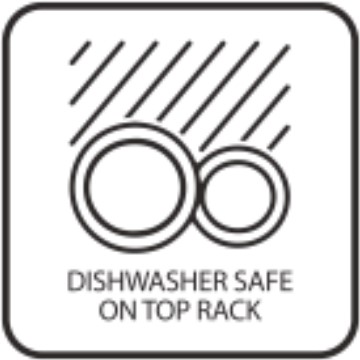
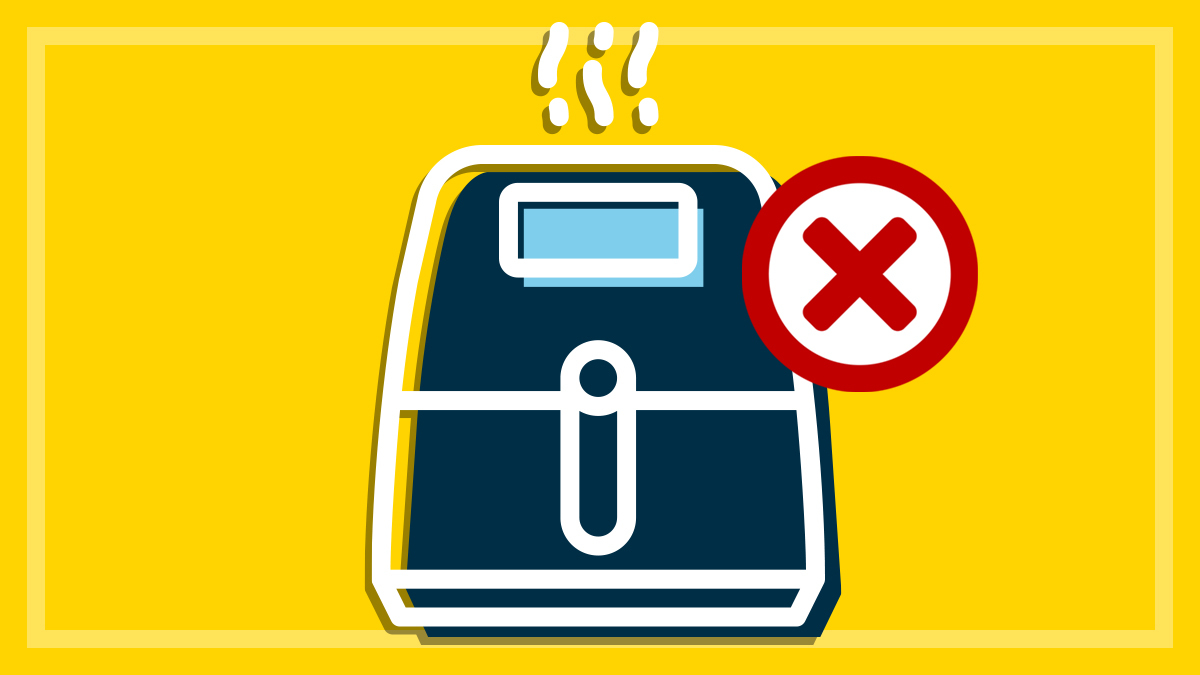
The images above are some commonly used dishwasher-safe symbols that you might come across on your crockery or containers.
They’re not the only ones out there, but they’re all generally variations on a theme, so look for a picture of plates and/or glasses under drops of water or a shower.
There’s no official definition of what ‘dishwasher safe’ really means
Just to make things even more confusing, there’s no official definition of what ‘dishwasher safe’ really means. Manufacturers all have their own definitions and processes for determining whether something can be put in the dishwasher.
Bear in mind, too, that some items that are labelled ‘dishwasher safe’ can still degrade when washed in the dishwasher over long periods of time – they’ll just take longer to deteriorate than products that aren’t dishwasher safe.
Dishwasher safe – top rack only
Items on the bottom rack of the dishwasher sit just above the heating element, which means that they’re subjected to more heat than those on the top rack.
For plastic and glass, the top rack is a better option as it’s a lower temperature and has a less intense washing action.
Dishwasher safe glassware
Glass can be fragile and prone to breakage, so the dishwasher isn’t always the safest place for delicate glassware. Plus, the harsh chemicals in dishwasher detergent can cause haziness.
The dishwasher safe glassware symbol means an item will stand up to the rigours of the dishwasher.
A dishwasher safe icon with a line through it means the item cannot be safely washed in the dishwasher.
An illustration of a hand in a bucket of water, in the context of cutlery and crockery, means the item should be washed by hand.
Can I wash it in the dishwasher?
CHOICE kitchen experts weigh in on whether or not the following items can be washed in a dishwasher.
Everyday tableware should be fine in the dishwasher, but delicate glasses and sharp knives should be washed by hand.
Crockery, cutlery and tableware
It’s tempting to chuck every single thing in the dishwasher to save on handwashing, but unfortunately there are some items that won’t fare well in the dishwasher.
We’ll explain which ones are safe to go in the dishwasher and which you will need to wash by hand if you want to keep them in good condition.
Everyday tableware
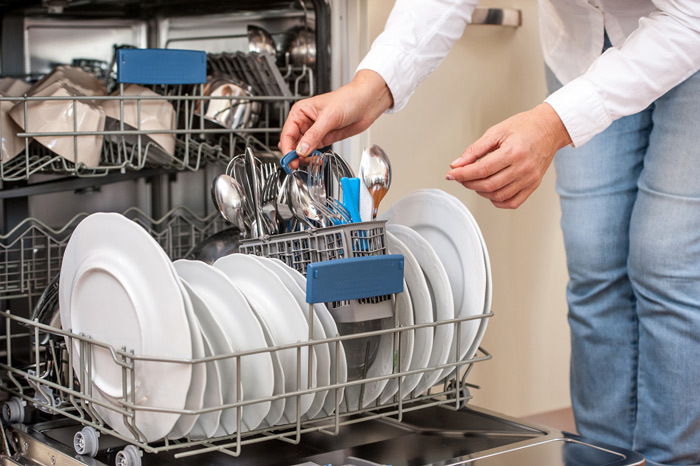
Dishwashers are great for pretty much all everyday plates, cups and cutlery, so given the time and water savings of a dishwasher, racking your plates in one instead of stacking them by the sink is a no-brainer.
And because your dirty plates are out of sight, you can wait a couple of days till the machine’s full before you run it for even more savings.
Can you put wine glasses in the dishwasher?
Fragile glassware can scratch or break easily. So if you value your stemware then wash it by hand instead. (And just to be on the safe side – and avoid breakages – maybe wash them the next morning if you’ve had a few glasses too many!)
Even durable drinking glasses can fall foul of the dishwasher and develop a white haze over time. Alkaline detergents slowly dissolve the glass itself (silicate filming and etching), leave tiny crystal formations (devitrification), and abrasives in the detergent can physically scour your glass (this gets worse with cheaper powder detergents).
If you’re washing in hard water then you may even find cloudy calcium deposits on your glass, though unlike other causes of hazing, this can be removed.
All that said, some manufacturers are going to great lengths to ensure their dishwashers are safe for delicate stemware, and some also include special racks to hold wine glasses safely, so we’re definitely seeing improvements in this area.
CHOICE tip: If your wine glasses have lingering red wine stains, use denture cleaner to remove them.
Can you put lead crystal in the dishwasher?
Leave your nan’s lead crystal glassware in the display cabinet next to the teaspoons, because your dishwasher’s high temperature and alkaline detergent can convert the lead into a soluble form which can be ingested next time you’re enjoying a refreshing crème de menthe.
Can you put sharp knives in the dishwasher?
Dishwasher-wise, your good knives don’t make the cut – carbon steel corrodes rapidly in your dishwasher’s harsh, alkaline environment, and bouncing around with other items will dull carefully honed cutting edges.
Plus, emptying the dishwasher is a far riskier proposition with a 12″ lobster-splitter somewhere inside.
Item
Dishwasher?
Expert comments
Bone-handled cutlery
No
The dishwasher will corrode the bone.
Ceramic knives
No
Dishwashing will dull the blade, and you could cut yourself emptying the dishwasher.
Chef’s knives or sharp knives
No
Carbon steel knives will corrode in the dishwasher, and will lose their sharpness bumping against other items. The presence of sharp knives also makes emptying the dishwasher dangerous.
Coffee plungers
Yes
You may want to disassemble and wash the components separately.
Fine china
No
The dishwasher can damage hand-painted details, or chip delicate edges.
Hand-painted ceramics
No
The paint will dull and fade and delicate ceramics can chip.
Lead crystal
No
Can leach the lead out of the crystal.
Mason jar lids
Yes
May shorten the life of the jar lid by corroding the plastic.
Pewter
No
Pewter has a very low melting point so could warp in the dishwasher.
Plastic plates
Yes
Top shelf only.
Plastics
It depends
If it’s not marked ‘dishwasher safe’, don’t put it in the dishwasher. Dishwasher-safe plastics should go on the top rack to prevent them being melted by the heating element.
Silver cutlery
No
Silver can discolour in the dishwasher.
Wine glasses
It depends
You can, but washing in the dishwasher will lead to etching and irreversible clouding on glassware over time. Denture cleaner will remove red wine stains.
Don’t want to scrub that dirty baking dish? Fair enough. But before you put it in the dishwasher and cross your fingers that it’ll be fine, give this list a quick scan to make sure it will survive.
Can you put pots and pans in the dishwasher?
Modern dishwashers do a surprisingly good job cleaning even heavily soiled stainless steel pots and pans and ceramic baking dishes. Combined with a good quality detergent, your dishwasher may clean away burned-on cheese and food particles that would pose a challenge when washing by hand.
Many dishwashers also have foldable or removable tines to make it easier to fit bulky pots, and some even have an intensive zone, designed specifically to give cookware an extra-thorough going over.
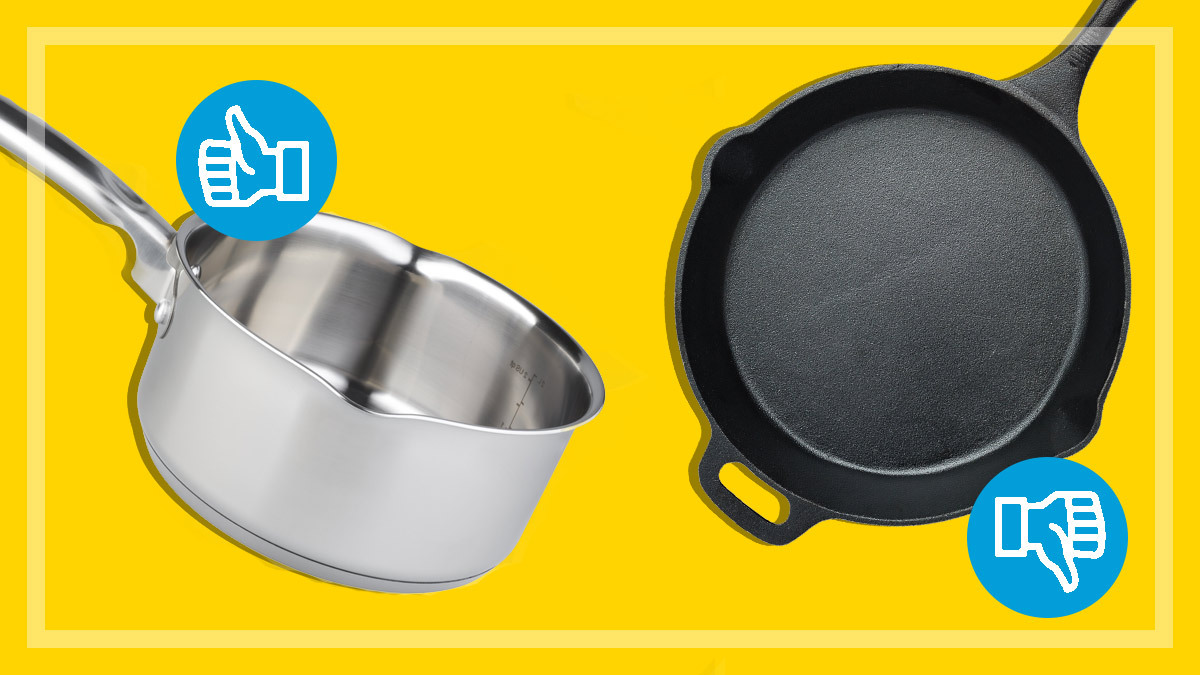
However, you should still handwash non-stick, cast-iron, copper and fine aluminium cookware because they can be damaged by the dishwasher.
Can you put non-stick cookware in the dishwasher?
Non-stick coatings will deteriorate rapidly in your dishwasher – follow the manufacturer’s cleaning instructions to extend their life. (And maybe ask yourself if they’re really non-stick, why is there anything to wash off in the first place?).
Can you put cast-iron in the dishwasher?
Your dishwasher won’t damage the cast-iron itself, but it will strip off the layers of precious seasoning that protect your pan from rust and make it virtually non-stick.
But your skillet shouldn’t go near the sink either – just wipe it out with paper towel to clean it, and remove stubborn cooking remnants with salt and elbow grease.
Item
Dishwasher?
Expert comments
Aluminium
No
Annodised aluminium can be damaged and discolour in your dishwasher.
Baking cookware
It depends
Stainless steel is fine. Don’t put aluminium or non-stick bakeware in the dishwasher.
Brass or any soft alloys
No
These can warp, bend or discolour.
Cake tins
It depends
Many cake tins are dishwasher safe, but springform pans aren’t. Some may need soaking or light scrubbing, but don’t use abrasive cleaners.
Cast-iron
No
The dishwasher won’t hurt the pan at all, but it will strip its precious seasoning. And if the cast-iron stays wet for any length of time, it will rust.
Ceramic baking dishes
Yes
A dishwasher (bottom rack) makes cleaning baked-on residue easy.
Copper cookware
No
These can warp, bend or discolour.
Enamel-coated cast iron cookware
No
Putting your enamel coated cast-iron pot in the dishwasher causes the rim of the pot and lid to rust, dulls the enamel surface and removes the pot’s non-stick capabilities. It can also weaken the lid screws.
Enamel-ware
Yes
Using the dishwasher removes any baked-on residue easily, but they’re easy to clean by hand otherwise.
Non-stick pans
No
Damages the delicate non-stick coating.
Pizza stone
No
Pizza stones should be kept as dry as possible – don’t immerse in water.
Silicon bakeware
Yes
Springform pans
No
Putting them in the dishwasher can cause rust.
Stainless steel
Yes
Stainless steel pots with heat-resistant plastic handles are fine, but only clean in the dishwasher occasionally as the detergent can weaken the coating.
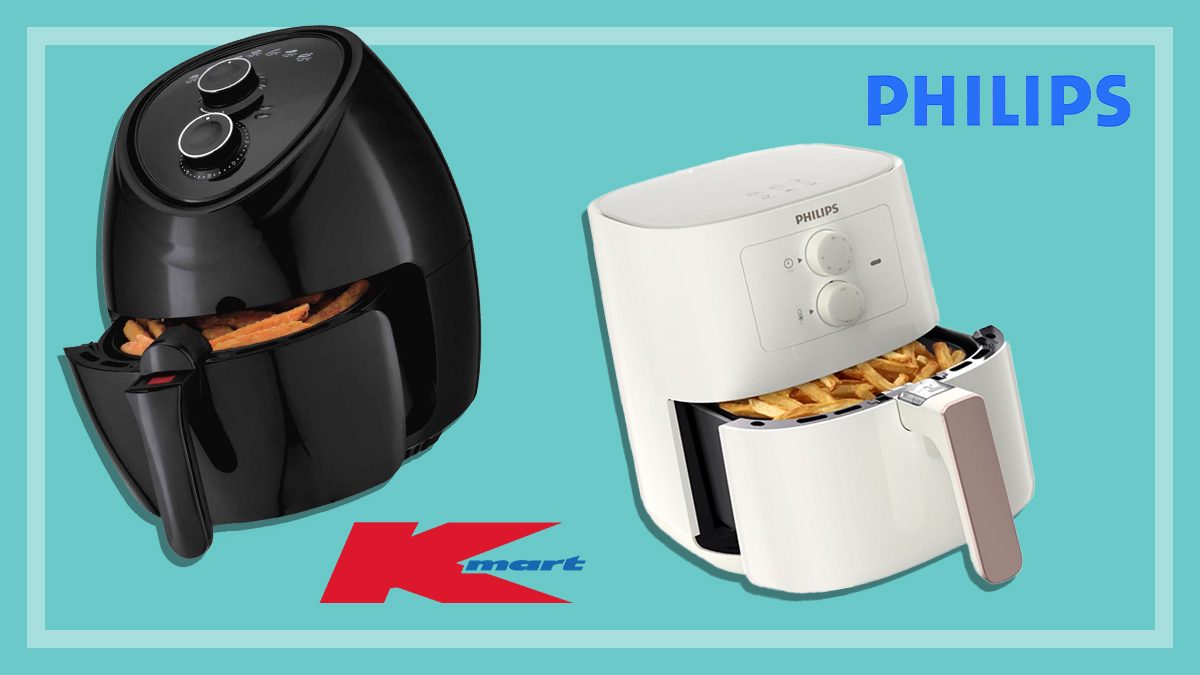
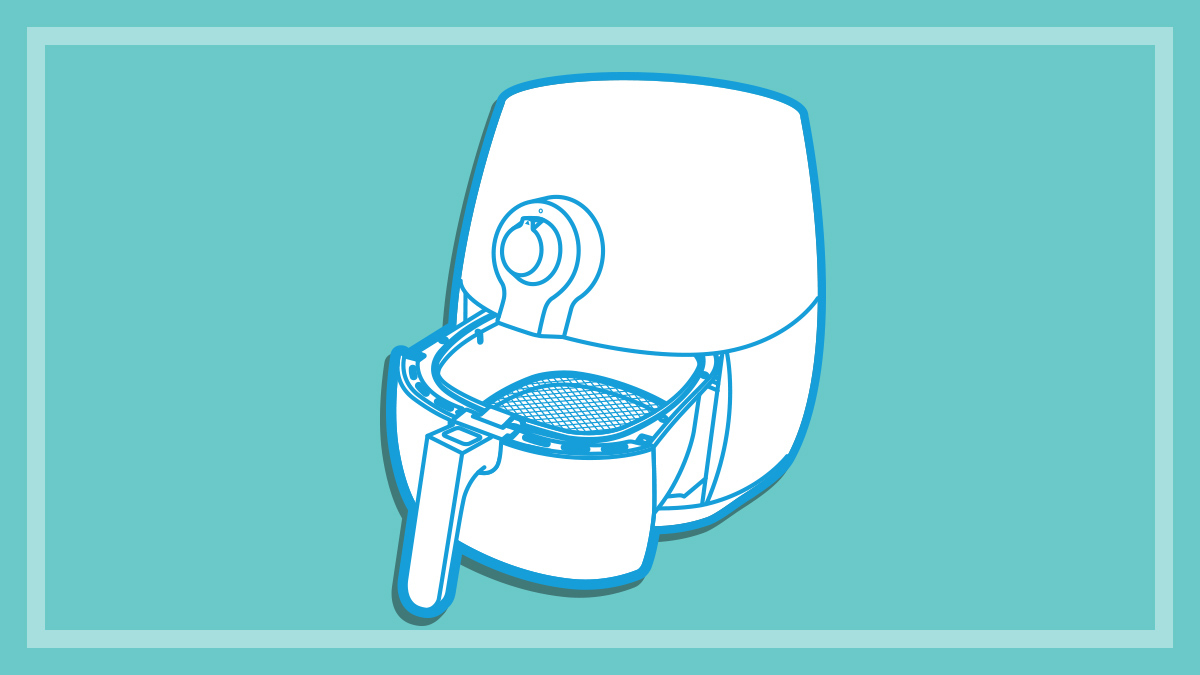
Can you put your Thermomix parts or air fryer baskets in the dishwasher? Check the table below to find out.
Item
Dishwasher?
Expert comments
Air fryer parts
It depends
Most parts are dishwasher safe, but should be cleaned by hand if they have a non-stick coating
BBQ hotplate
No
It’s best to just wipe food particles and excess oils from the hotplate. You actually need the oil from the previous cook to protect the hotplate from rust.
Blender parts
No
We suggest washing these by hand. Some jugs are dishwasher safe, but may not fit in your dishwasher.
Exhaust fan filters and covers
Yes
Food processor parts
No
Manufacturers say some parts can go in the dishwasher but our kitchen experts don’t recommend it as the dishwasher can weaken and discolour areas of the plastic.
Hand mixer attach-ments
It depends
Check the manual first to see if they’re dishwasher safe, as not all of them are.
Juicer parts
It depends
Centrifugal (fast) juicers often have dishwasher-safe parts, but cold press (slow) juicers normally don’t.
Oven racks
Yes
Make sure they don’t interfere with the operation of the machine.
Pressure cooker lids
No
Small particles of food can get stuck in the pressure valves.
Stove burners
It depends
Can be heavy and bulky so could interfere with the operation of the spray arms, or bend the dishwasher racks. Use caution.
Thermomix parts
It depends
Stainless steel jugs/bowls can be cleaned in the dishwasher with the blade removed. If they have plastic handles, double-check that they’re heat-resistant first.
Trivets from gas cooktops
It depends
Can be heavy and bulky so could interfere with the operation of the spray arms, or bend the dishwasher racks. Use caution.
Let’s face it: kids can be messy. Can a dishwasher help make cleaning up easier?
Plastics
A hot dishwasher can warp or damage some plastics, and squeezing plastic items into small spaces may also cause warping – so while you can put them in the dishwasher, they should go on the top shelf.
Plastics also have a low thermal mass, so they don’t dry especially well in your dishwasher.
Item
Dishwasher?
Expert comments
Baby bottles
Yes
Wash on the top shelf. Depending on your baby’s age, you may still need to use a steriliser.
Bath toys
Yes
Wash on the top shelf. Don’t put squeaky toys or anything with batteries in the dishwasher.
Breast pump parts
Yes
Wash on the top shelf. Don’t put anything electronic or battery-operated in the dishwasher. See baby bottles.
Dummies and teething rings
Yes
Don’t expect them to be sterilised. See baby bottles.
Lego and other plastic building blocks
Yes
Put in a mesh bag on the top shelf so small pieces don’t get lost.
Lunchboxes
It depends
Check for any dishwasher safe symbols.
Plastic toys
It depends
Don’t wash squeaky toys – they’ll fill up with water. Top shelf only. Put small pieces in a mesh bag so they don’t get lost.
Alice Richard is a Content creator and marketer. Alice writes on a range of topics, from health insurance to heaters and BBQs to bargain-hunting, always with the aim to help consumers find the best products to buy, and which to avoid.
Alice can take vast amounts of data from CHOICE product tests and turn it into content that is easily digestible and fun for readers.
Alice has a Bachelor of Arts from the University of Queensland. LinkedIn
Alice Richard is a Content creator and marketer. Alice writes on a range of topics, from health insurance to heaters and BBQs to bargain-hunting, always with the aim to help consumers find the best products to buy, and which to avoid.
Alice can take vast amounts of data from CHOICE product tests and turn it into content that is easily digestible and fun for readers.
Alice has a Bachelor of Arts from the University of Queensland. LinkedIn
For more than 60 years, we've been making a difference for Australian consumers. In that time, we've never taken ads or sponsorship.
Instead we're funded by members who value expert reviews and independent product testing.
With no self-interest behind our advice, you don't just buy smarter, you get the answers that you need.
You know without hesitation what's safe for you and your family. And our recent sunscreens test showed just how important it is to keep business claims in check.
So you'll never be alone when something goes wrong or a business treats you unfairly.